Introduction
NZXT’s Relay sound system offers a complete audio solution for gamers who want to upgrade their setup. We’ve already reviewed the Relay Headset and SwitchMix so it was only fitting that we took a look at the speakers, too. In our full NZXT Relay Speakers review, you’ll find out whether or not they’re a good purchase for the audio-conscious gamer.
At A Glance
NZXT Relay Speakers
The NZXT Relay speaker system looks as great as it sounds, as long as you get the subwoofer. If you do, you’ve got a very capable desktop setup that’s very pleasing to listen to, no matter what you’re doing on your PC.
Pros
- Sleek and compact design
- Good build quality
- Can get loud without distortion
- Very nice and rather neutral sound
- Surprisingly wide soundstage for desktop speakers
Cons
- The subwoofer is pretty much a must; without it the bass is too underwhelming
- No front-facing controls
- No USB input + speaker wire setup means that it’s not an ideal set for beginners
- Limited connectivity options
First Impressions and Packaging
Packaging
Before we dive into the review, it’s good to know that the Relay speakers are sold in two parts. You have the speakers (which retail for $249.99) and then there’s also the separately sold subwoofer ($149.99). You don’t need the subwoofer, but I absolutely recommend getting it if you’re looking to invest money into upgrading your setup. I’ll talk more about why later on in the review.
Inside the box of the speakers, you get:
- Two speakers
- Speaker wire
- 3.5mm cable
- L/R RCA cable
- Power supply cable
Inside the box of the subwoofer, you’ll find:
- The subwoofer
- Power supply cable
- RCA cable
First Impressions
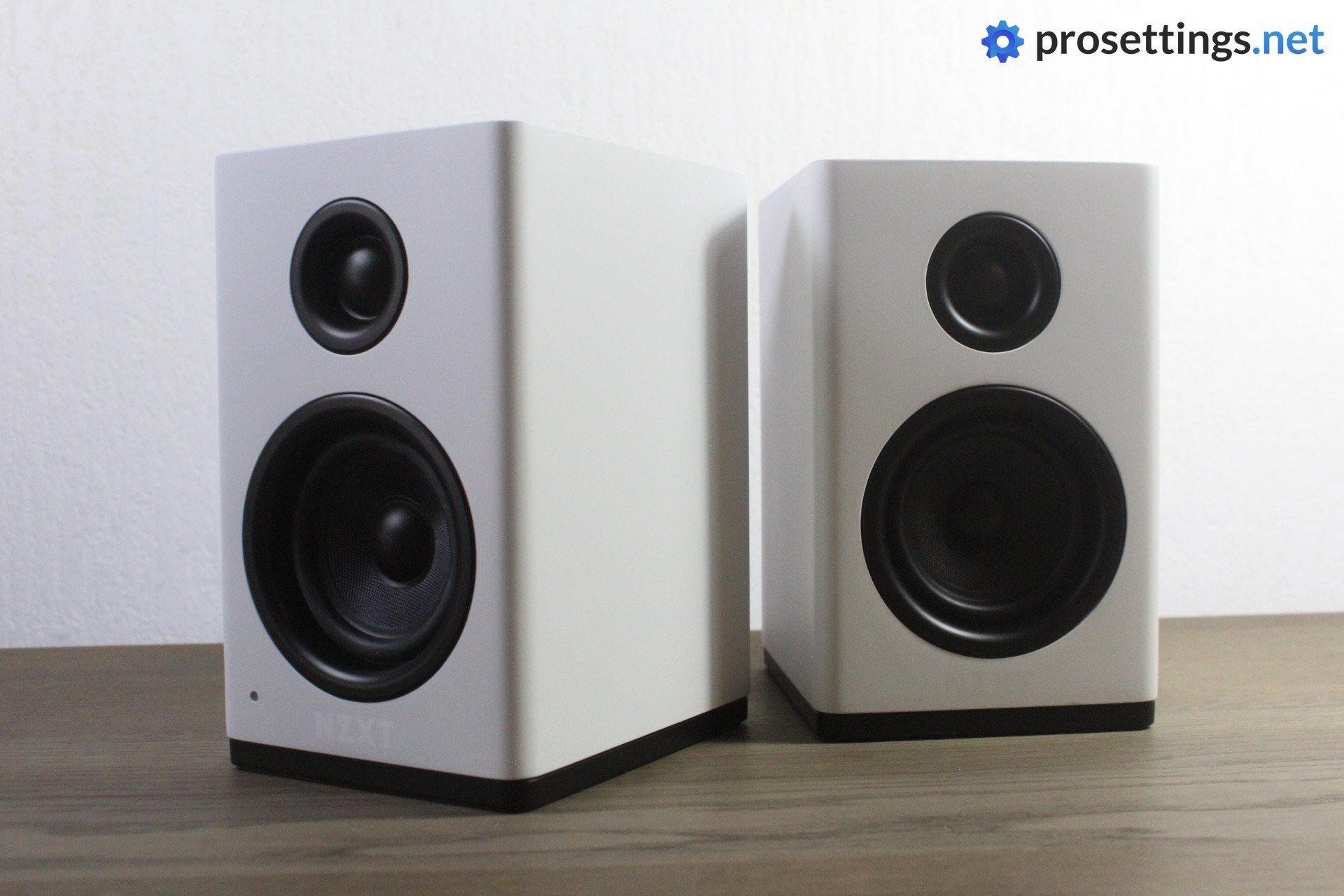
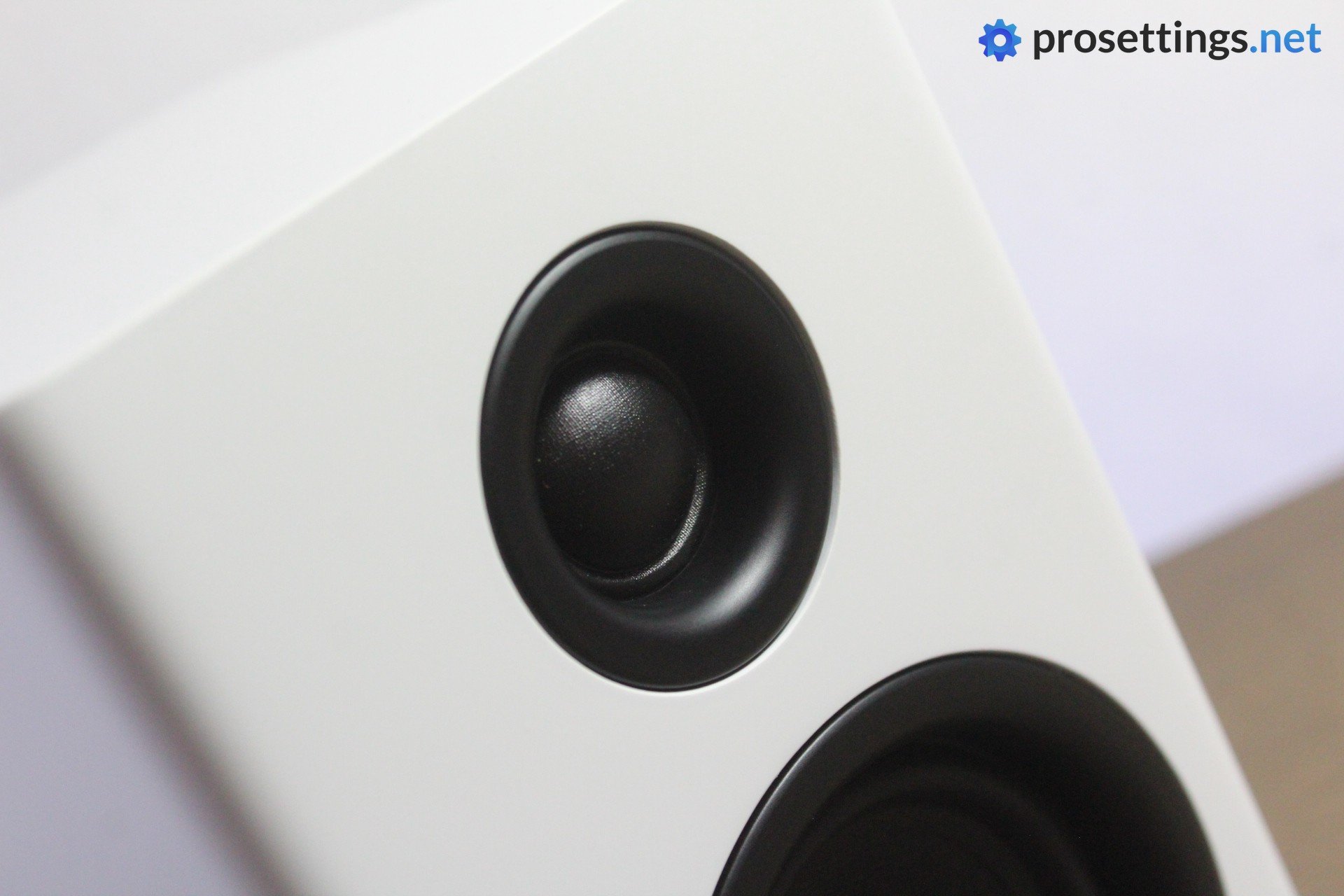
Design-wise, NZXT nailed it. True to their style, the speakers have a minimalistic look with a matte finish and clean lines. I also like that they’re rather compact. These are not desk-cluttering behemoths, but rather a stylish finisher to a desk setup. You’ll be able to fit these onto smaller desks without them looking out of place.
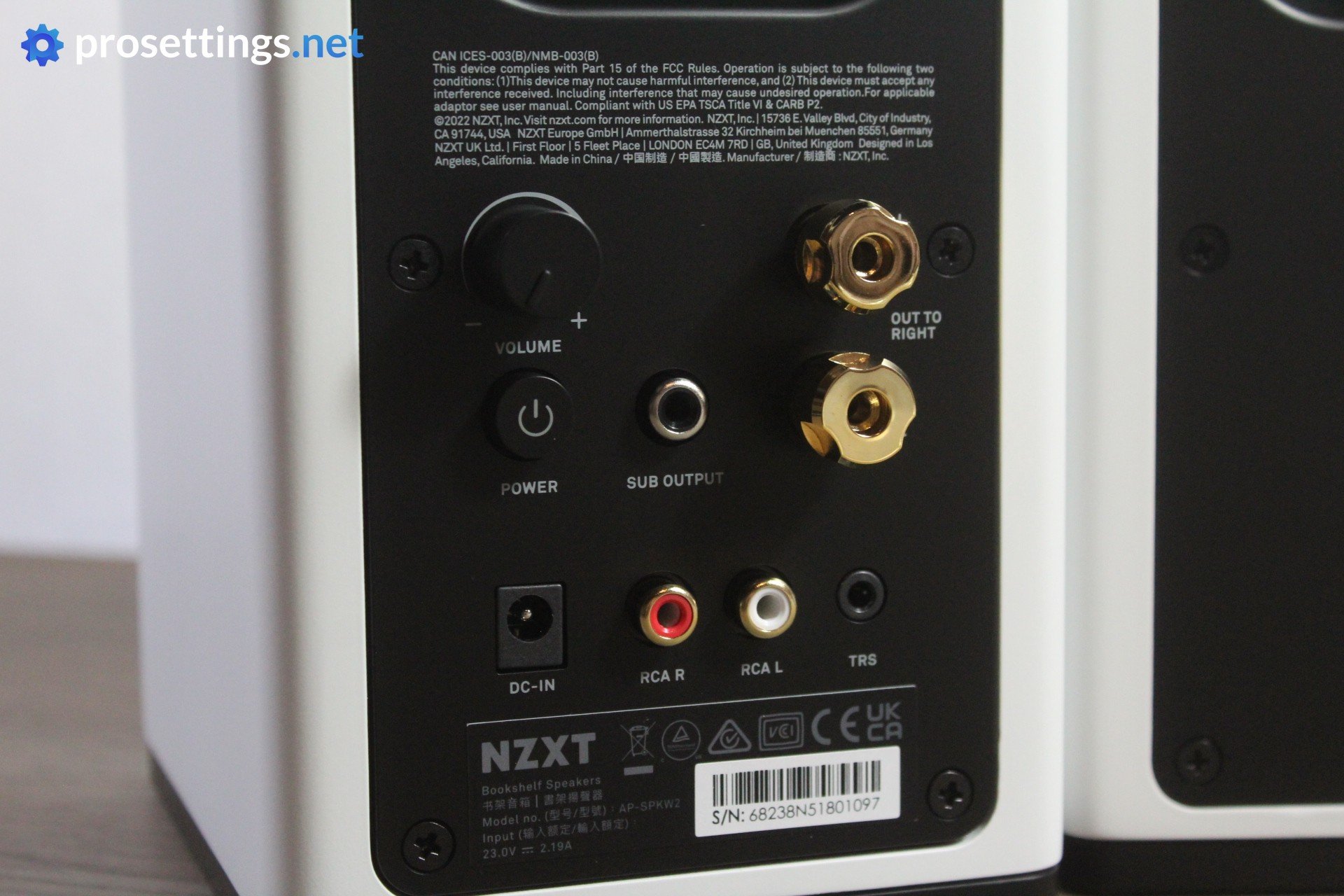
Something that I did notice right away is the lack of controls on the front. It’s perhaps a personal thing, but on speakers, I like controlling the volume with a knob. And sure, that knob is there, but it’s located on the back, making it a lot more difficult to quickly adjust the volume. In a way, I get why this knob is hidden. The speakers look a lot cleaner without the knob, and if you’re using the entire Relay sound system, you have the SwitchMix to serve as your quick volume adjuster, but I still would’ve liked a subtle front-facing volume knob.
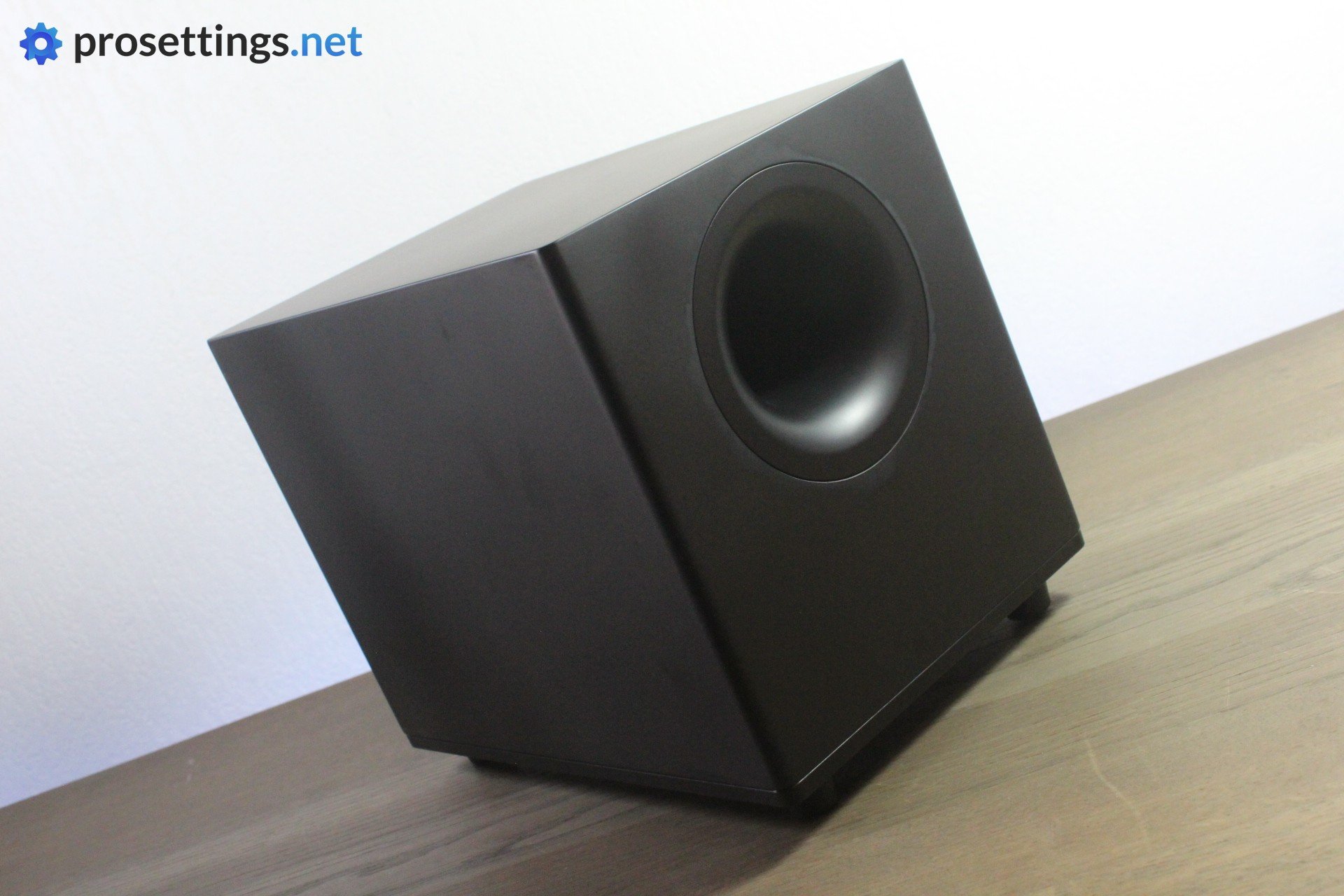
For this review, I also got the subwoofer. The subwoofer looks clean, stylish, and has a relatively small footprint. It will fit underneath most desks with ease.
Connectivity
Using the Relay speakers is absolutely not a plug-and-play affair, and they’re not like your typical pair of cheap desktop speakers. For starters, you have to interconnect the speakers via speaker wire. Granted, that’s not the most difficult thing to do, but it’s good to know that you might want to set aside some time to properly set your speakers up.
In addition to that, the Relay Speakers do not support digital or optical inputs. There’s no USB, no Bluetooth, no optical, no HDMI Audio Return Channel, … That’s fine if you’re running the system from a PC with a 3.5mm audio jack or you’re using a DAC or the SwitchMix, but it does limit the amount of options you can connect the speakers to somewhat. With that said: the vast majority of modern gaming PCs should support these speakers without any problems. You can’t plug them directly into your console, however, and most modern TVs will also not be compatible.
If you run into connectivity issues, you can always buy adapters, but it would’ve been nice to see some other connectivity options as well.
Performance
Sound Quality
If you’re not into the world of audio equipment, the Relay speakers might seem like a pricey product at first glance. But quality costs money, and these speakers absolutely blow any Walmart-style pair of cheap speakers out of the water.
Firstly, I have to say that I’m impressed by the soundstage and imaging. It’s precise enough that you can pick out most directional audio in games like you would with a headset. The overall sound feels wide, with a sense of space that really helps bring immersive content to life.
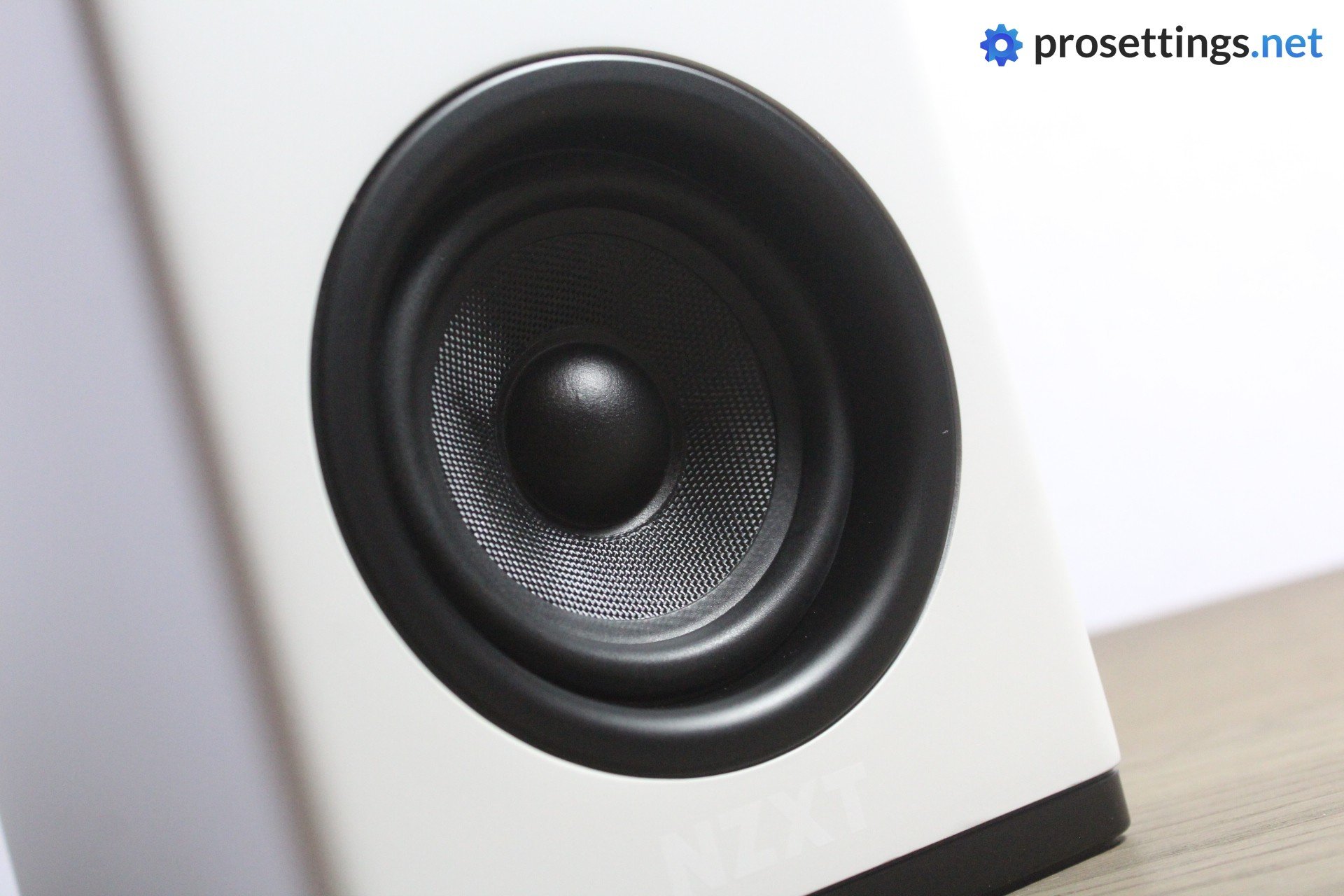
The sound itself is tight, clean, and natural. The mids and highs stand out here in particular. Vocals are crisp, instruments have nice separation, and there’s no muddiness present even when listening to complicated tracks. No matter if you’re listening to music, watching videos, or playing single-player games, you’ll be impressed by the clarity and accuracy that these speakers deliver in the mid-high range.
Sadly, the bass is quite disappointing. Even at higher volumes, there’s just nothing of that gut-rumbling ‘oomph’ present. So things like explosions in video games, bass-heavy tracks, and action-filled movies will lack impact and sound a little ‘light’. Luckily, this can be fixed by adding the subwoofer, which I’ll talk about in the next section.
Before moving on, there’s one more thing that I need to mention, and it’s that they can get very loud without distorting. For me, that’s not as much of an advantage as I live in an apartment, but you can absolutely turn these speakers up to small party levels without any hint of distortion. If you’re the type of person who likes to go hard when they’re gaming or consuming content, you’ll love these.
Subwoofer – Optional or Not?
If you’re wondering whether or not you can save some money and just buy the speakers without splurging on the subwoofer, I would say that the answer is ‘no’. Unless you really don’t like bass or you’re only buying the speakers to edit and listen to things like podcasts, you’ll find that the speakers on their own sound thin.
Obviously, everyone is different, but for me one of the major reasons to invest in a quality pair of speakers is to get that deep, satisfying bass. And without the subwoofer, there’s just not enough low-end to give weight to explosions, basslines, or cinematic fights. Again: if you don’t care for those kinds of things then the speakers on their own will sound fine, but for me, adding the subwoofer improves things significantly.
You get a lot more punchiness and fullness with the subwoofer connected, and you’ll also notice that musical tracks sound warmer and fuller. To me, the subwoofer completes the speaker set.
With that said, you shouldn’t expect a teeth-shattering bass even with the subwoofer connected. The people at NZXT seem to be aiming for a balanced sound here, and that’s what you’re getting. Even at higher volumes, the bass remains nuanced, and it never goes to that stomach-rumbling level that you’ll find in larger or more bass-oriented systems.
It’s important to consider the product category, though. This is a desktop speaker set with a rather small subwoofer, meant for listening up close. It’s not meant to entertain a room full of people. In that sense, it’s logical that the bass isn’t too overwhelming.
Performance for (competitive) gaming
This is a website that’s aimed at competitive gaming, so we have to talk about how it stacks up in tryhard games. And like I mentioned earlier on, the imaging is quite impressive. It’s no easy feat for a set of two speakers to give you a good sense of positional awareness, but NZXT have pulled it off here.
With that said, I would never use speakers for any type of competitive game where sound matters. Quality headsets or headphones are just a way better fit for the task, so the competitive performance is of secondary importance to me. If you’ve got a certain budget to spend on audio equipment and you’re mainly browsing for something that will boost your gameplay, invest in a good pair of headphones or a good gaming headset. That’s not a knock on the Relay Speakers, it’s just how it is with speakers versus headphones.
I did love the speakers for general gaming, though. Walking through the world of Baldur’s Gate III felt fantastic, with sounds of the city coming at me from all different directions. With the subwoofer, my spells and hits felt like they landed twice as hard. In terms of immersion in gaming, these speakers absolutely hit the mark.
Everyday Usage
I’ve already mentioned this earlier on in the review, but I really don’t like the fact that there are no physical controls on the front. There’s no power switch, and no volume knob. That’s especially irritating in a desktop setting (which these speakers are meant for), where quick access matters. I know that I can change the volume via my PC, but that’s annoying to me personally. Here, it seems like you’re expected to manage everything through software or another external piece of hardware like the SwitchMix or a DAC.
Again: I know that the Relay Speakers are part of an entire NZXT audio ecosystem and that the SwitchMix does have a volume knob. And yes, it feels amazing if you’ve got all the Relay pieces set up. I’ve tested that too. But I doubt that the majority of people who are interested in these speakers will also cough up the money for the Relay Headset and the SwitchMix, so I find the lack of any front-facing controls a bit puzzling.
Aside from this, I have no complaints about the Relay speakers. They’re small, look great in pretty much any setup, and they sound great (with the subwoofer) at all volume levels. They’re also versatile enough to shine in a wide variety of applications, from gaming to music listening to podcasts. As long as you’re not a bass-first type of person, these will have you covered.
Conclusion
The NZXT Relay speaker system looks as great as it sounds, as long as you get the subwoofer. If you do, you’ve got a very capable desktop setup that’s very pleasing to listen to, no matter what you’re doing on your PC. It’s balanced, natural, clean, doesn’t distort easily, and sounds wonderfully immersive thanks to an impressively wide soundstage.
With that said: it does come at a price, and it’s not without faults. The speakers on their own are kind of pricey (compared to regular gaming speakers; as an audiophile-focused product they’re dirt cheap), and if you want to get the full experience you absolutely need to get the subwoofer too, which adds to the cost. And even with the subwoofer there, the speaker system never quite gets into that ‘booming bass’ territory. So if you’re into that, you’re better off skipping these. On top of that, I find the lack of controls on the front panel to be annoying and the connectivity options are limited.
But, if you can live with those shortcomings, you’re getting a lot of audio satisfaction with this package. If you want a neutral set of speakers that’ll help immerse you in your content of choice, this is a compelling option. If you’re willing to add the other NZXT Relay products to the mix, it gets even better.
This product was received for free from the manufacturer and given to our reviewer to test and review. Brands and manufacturers have no editorial control over our reviews. For more information, check out our review FAQ.
Former semi-pro gamer turned writer, product reviewer, and community manager.

