Introduction
In Overwatch, team comps (comp is short for ‘composition’) aren’t just about picking strong heroes and hoping for the best. At its core, the game is built around synergy and teamplay. Even the strongest players can’t turn the fortunes of a wrongly-built team if they’re playing against a well-balanced one.
This teamplay aspect is often overlooked in lower ranks, where players focus on picking their mains instead of building a cohesive team. That’s why some matches feel unwinnable, even when no one on the enemy team is clearly outperforming you. It’s not that they are individually better; it’s just that they are playing with more synergy and have a better team comp.
Once you understand how these comps function, the game starts to make a lot more sense. So, here is everything you need to know about team comps in Overwatch.
What Is A Team Composition
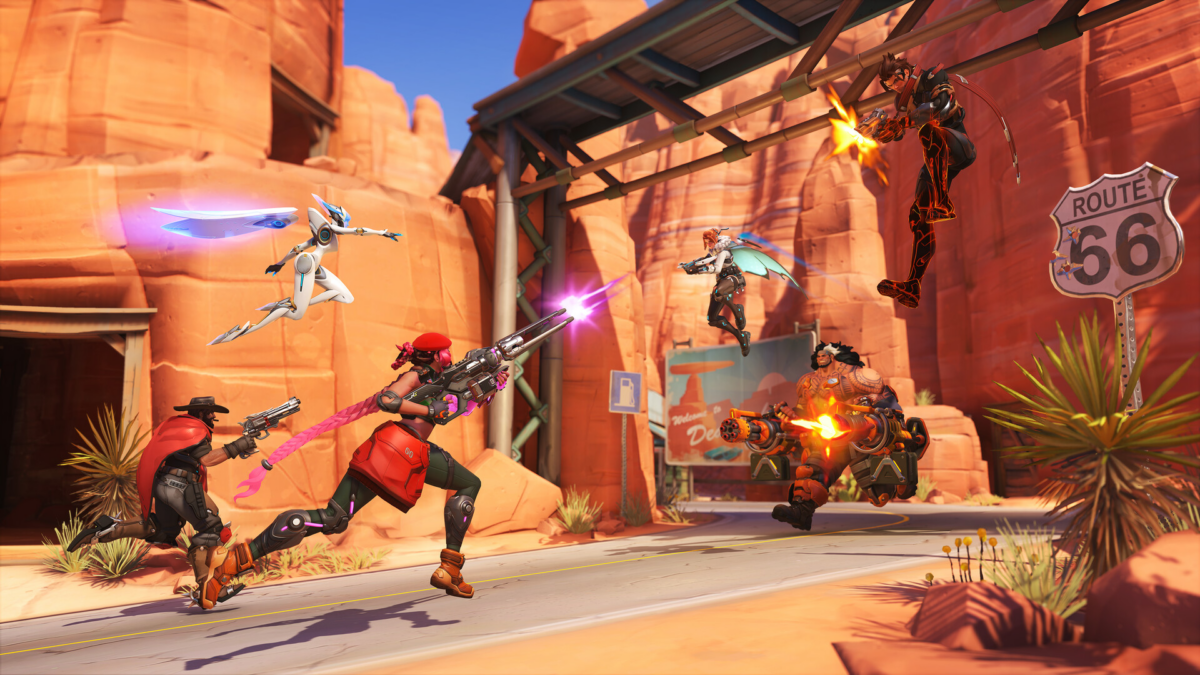
In simple terms, a team comp is just which heroes you choose to put together on a team. But, in Overwatch, you can’t just throw heroes together and hope for a good comp. A successful team comp consists of heroes that work well with each other’s playstyle. In fact, team comps in Overwatch are built around playstyles rather than roles.
Types Of Team Comps
Throughout Overwatch’s history, there have been many dominant team comps. Perhaps the most infamous team comp that emerged during the OWL days is the GOATs comp. It consisted of three tanks and three supports, with the idea of prolonging fights with huge levels of sustain. But after the removal of three tanks from 6v6 and Brigitte’s balance changes, the comp died out.
It’s impossible to list every single comp that has ever been used in the game, but there are three that have managed to stand the test of time. These are Poke, Brawl (or Rush), and Dive. All of these comps aren’t centered around a meta hero, but instead around play styles.
Brawl / Rush
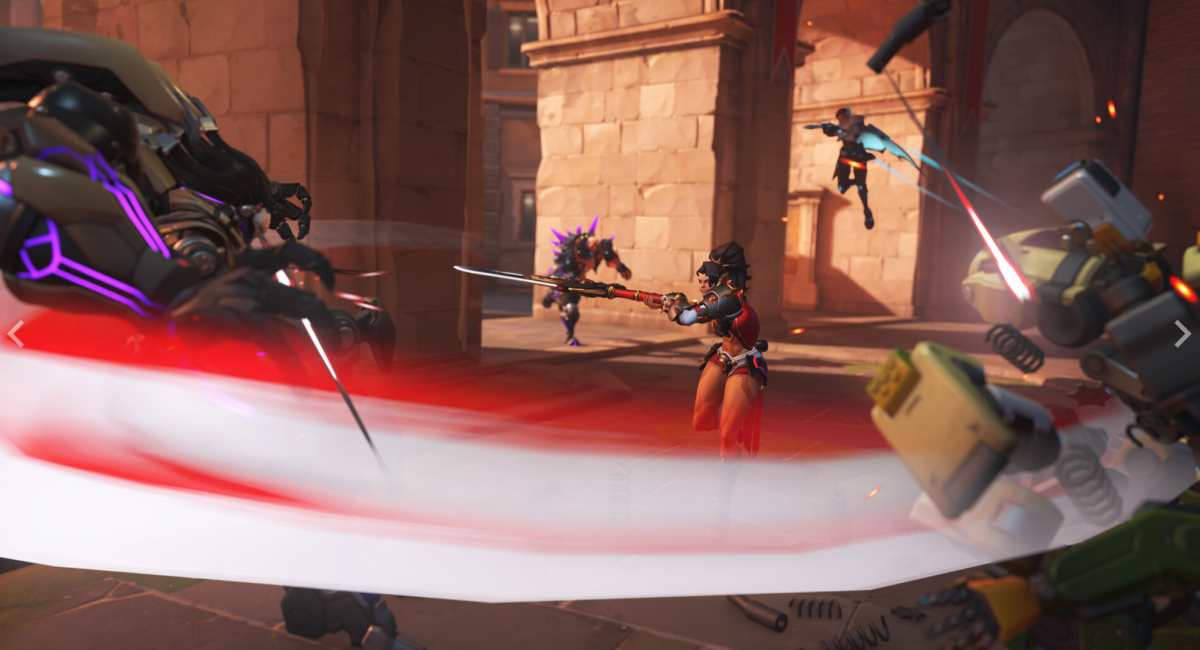
This is the simplest and easiest comp to play. The idea is to build a team that ‘brawls’ it out with the enemy team. You fight at the frontline with your entire team. Instead of spreading out, Brawl teams stick together and push forward as a unit.
These comps are strongest in tight spaces where enemies are forced into close engagements. However, they can struggle against long-range pressure or highly mobile teams.
Poke
A comp all about long-range pressure or ‘poking’ the enemy team from long range. It revolves around good positioning and pressuring the enemy team from different angles. You weaken the enemy from range and close in when you are at an advantage.
You will find long-range heroes in Poke comps. Think Hanzo, Widowmaker, Domina, and Sigma.
Dive
The idea of the comp is to ‘dive’ the enemy backlines and take down their supports. A dive comp revolves around high mobility heroes that can jump in, get a frag, and get out.
Unlike Brawl, Dive doesn’t care about fighting at the frontlines; they will ignore the tanks and jump over to get the supports or DPS.
Which Team Comp Is The Strongest?
The short answer is that none of the three is the strongest. In fact, these comps were built to counter each other. This is why they have managed to stand the test of time in Overwatch, whereas other comps faded because of balancing changes.
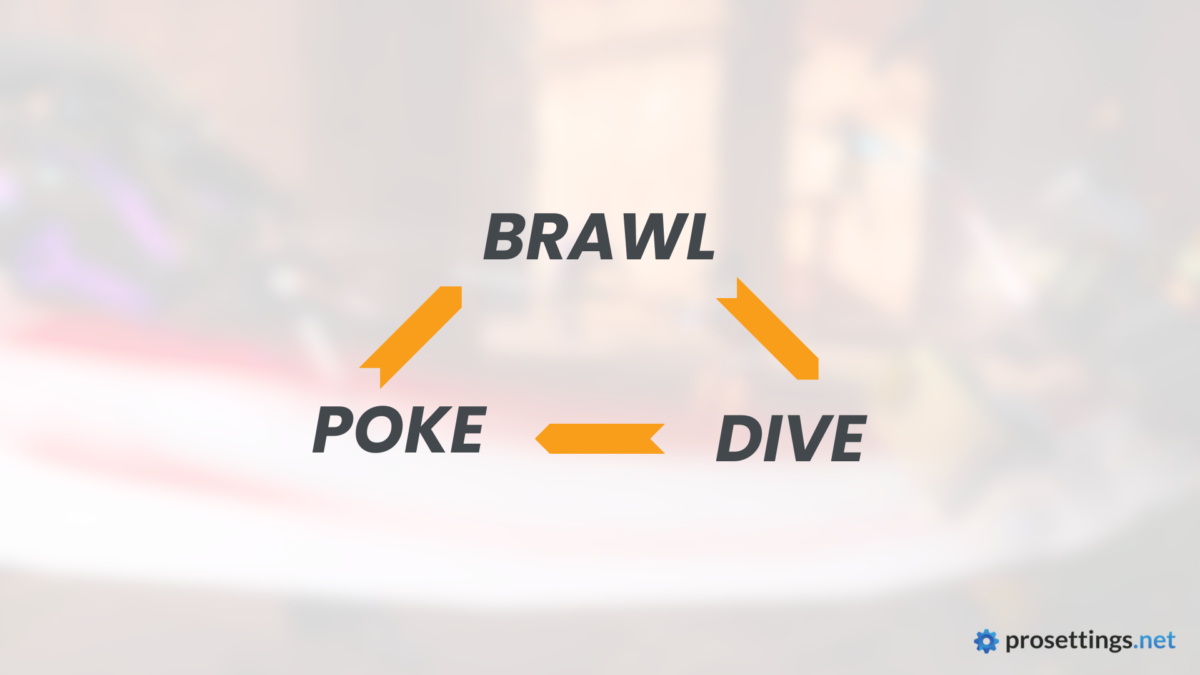
The three main comps form this balanced triangle like Rock, Paper, and Scissors.
- Brawl counters Dive
- Dive counters Poke
- Poke counters Brawl
Dive has a hard time getting to the backlines against Brawl because the entire team just sticks together, making it hard to find an isolated target. But Brawl feels weak against Poke because it’s hard for Brawl to close in on a team that relies on long-range pressure. Lastly, Poke gets countered by Dive, because Dive has the mobility to close in and find openings.
All three of these are built around a win condition. Dive comps want to quickly eliminate a key target before the enemy can react. Brawl comps want to overwhelm opponents through sustained close-range pressure. Poke comps aim to weaken enemies from a distance before committing to a fight.
Additionally, some comps are better on certain maps than others. Maps with large sightlines and long angles will favor Poke, whereas maps with close spaces and chokepoints will favor Brawl. In short, some maps will fit all three comps, like Kings Row, while others might not, like Numbani and Havana.
How To Identify Your Comp
The best way to ensure you are playing the correct hero for your comp is to look at your tank. Your tank will be the first signal that indicates which comp you and other teammates should play.
Tanks are the main anchor for your team, and your entire team mostly revolves around them. This is why you should look at your tank to figure out your comp. For example: if your tank is playing Winston, it makes no sense that the rest of your team is on heroes with little to no mobility, as you won’t be able to follow Winston when he (dis)engages.
Some heroes are flexible depending on playstyle, like Orisa, who can work with all three comps, or Rammatra, who can play Poke and Brawl.
It’s not really that complicated to understand which heroes belong in which comp. If you understand the playstyle behind the comp, you won’t have a hard time picking the correct heroes.
In any case: you should make sure that your team synergizes well. If your entire team is based around long-distance engagements on a map with huge sightlines, it makes little to no sense (in most cases) to pick Reaper, for example. Think about what your team is trying to accomplish, and how they’re trying to do it. Then, pick heroes that match this playing style.
Conclusion
Team comps become much simpler when you start identifying heroes based on playstyles. Look at your team in the hero selection screen, communicate if possible, and then decide on a good team comp. If it doesn’t work out, you can always switch to something else. At the end of the day, Overwatch is a team game, and you should pick heroes that work well with your team.

