Introduction
Secretlab is the industry leader (at the time of writing) when it comes to professional gaming chairs. But, for the past couple of years, the brand basically only offered one type of chair: the Titan EVO. Now, a new product joins the lineup. One that’s meant to be a bit more focused on productivity usage and is slightly cheaper (starting at $500) than their current flagship model. In our full Secretlab Atlas review, we put it to the test.
At A Glance
Secretlab Atlas
The Secretlab Atlas is an extremely interesting product. It does a number of things better than the Titan EVO but it also does some things worse.
Pros
- Assembly and packaging is top-tier
- Labeled controls are nice
- Magnetic head pillow attaches strongly
- Sleek looks
- Nice build quality
Cons
- Even the ‘hardest’ tilt level feels too loose for some people
- Armrests don’t lock fully, so they can slide around
- Locked lumbar support won’t suit everyone
Specs
| Adjustable Seat Height | Yes |
|---|
| Adjustable Seat Depth | Yes |
|---|
| Adjustable Armrests | Yes |
|---|
| Adjustable Backrest | Yes |
|---|
| Lumbar Support | Built-in |
|---|
| Material | Fabric, Artificial Leather |
|---|
| Max Weight | 100 |
|---|
Assembly
Secretlab chairs have always been extremely well-packaged and easy to assemble, but the brand has taken it up a notch with the Atlas. The packaging has become even better, and the assembly process is extremely easy and straightforward. The manual is clear and precise, you get everything you need in the box, and there are no finicky procedures where you have to position a heavy chair part just right in order to get it to fit.
I’ve assembled a lot of gaming chairs at this point in time, so I do have a lot of experience, but even if this is your first chair, it should be a breeze to put this together. Every piece that you might conceivably put in the wrong way is clearly labeled with a ‘front’ indicator, and there are cardboard covers around other pieces that tell you exactly what it is and where it goes.
You don’t even need to have a friend there to help you, as you can lean the backrest on the box to then slide it into position, so there’s no heavy lifting required.
All in all, it took me about 15 minutes to put this chair together, and I did not hesitate at any step due to the clear instructions.
Adjustability and Features
The Secretlab Atlas has the following adjustable points:
- Height adjustment
- Adjustable armrests (height + forward/backward position)
- Adjustable seat depth
- Backrest adjustment
- Chair tilt adjustment and tilt-lock
- Head cushion
Secretlab fans will note that there’s one important factor missing, and that’s the adjustable lumbar support. Indeed, this is locked on the Atlas. The armrests also aren’t as adjustable as the ones found on the Titan EVO. Both of those aspects are notable steps down from the flagship model, but I’ll speak more on how this influences the comfort later on.
First Impressions and Materials
You can get the Secretlab Atlas in a number of different configurations. There’s the regular model, and then there are also ‘plus’ models. These plus models offer the newest upholstery materials and include NanoFoam Composite foam, which is an upgrade from the older Cold-cure foam. Lastly, the plus models also have color-matched hardware for a sleeker, more premium look.
As is tradition with Secretlab, you can get the chairs with a fabric finish or with a leatherette finish, so there’s plenty to choose from.
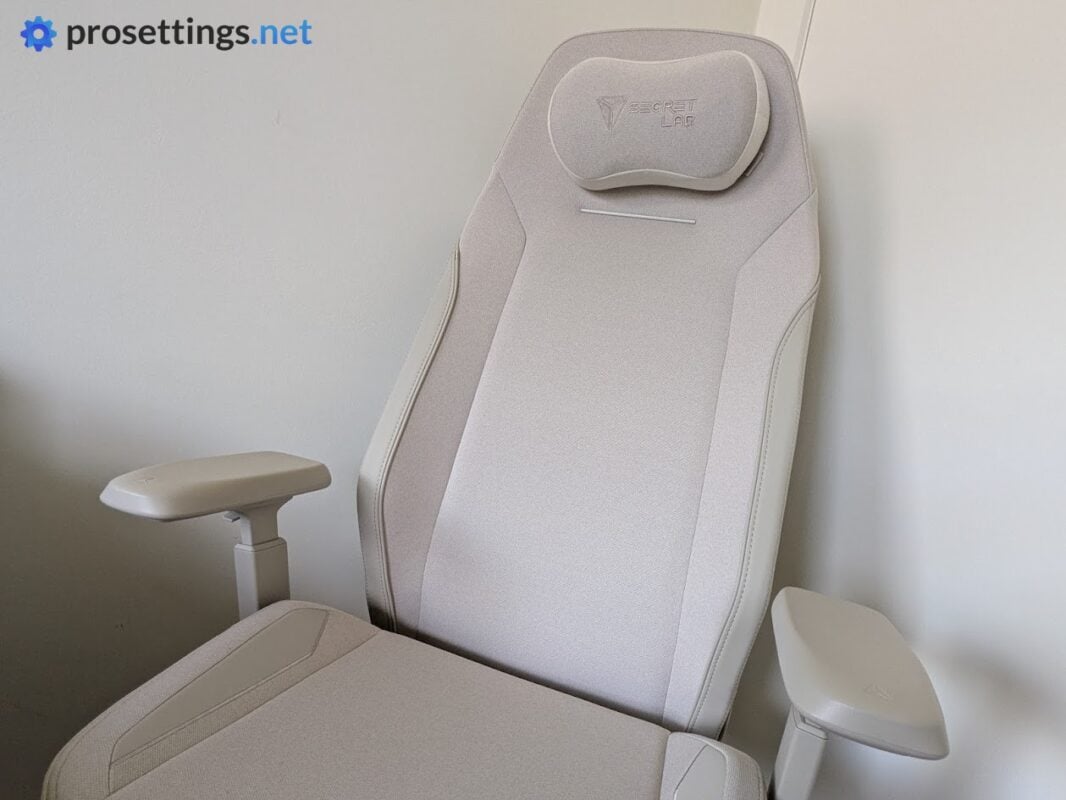
I went with the Dune+ model, and I am very impressed with this. The whole chair has the same color tones, and it quite simply looks beautiful to me. That’s partially because it matches the colors of my workspace quite well, but also because it’s an interesting departure from the usual gaming chair colors and designs. All of the materials and colors match up well and look consistent, leading to a beautifully uniform-looking product. This is a chair that would fit perfectly inside a high-end office building.
In terms of materials, some compromises have been made. The base, for example, is made out of reinforced nylon instead of aluminum alloy. I personally don’t mind this, though, as the nylon base feels dense and sturdy (rather than cheap and porous) and it also makes for a lighter chair.
Comfort and Adjustability
Foam
As mentioned, the plus models come with Secretlab’s NanoFoam Composite foam. This is notably softer than the foams that Secretlab used in the early days, but it’s not quite ‘couch-like’ either. That’s for a reason, though. The engineers at Secretlab say that going for a foam that’s too soft will lead to worse posture, which causes you to develop aches and pains when you’re sitting for longer periods of time.
I suspect that a lot of what makes a foam ‘good’ will also come down to personal preferences and the way your body moves and sits (so long as the foam stays within certain parameters of course; extremes are never good) but in any case: I love the foam here. It’s soft enough so that I can sit in it all day without getting annoyed, but it’s not so soft that I start tilting in all kinds of different, non-ergonomic directions. For me, this foam is an improvement over the earlier ones that Secretlab used, and I think this is a very accessible seating experience.
Lumbar Support
The lumbar support on the Secretlab Atlas is locked in place. To me, that’s a mistake. It fits me just fine (though it’s not completely perfect) but having a totally locked lumbar section excludes a large number of potential clients by default.
I get that they wanted to have a differentiator between the Atlas and the Titan EVO, and the chair looks a lot sleeker due to not having a large, configurable lumbar cushion wedged in the backrest, but I would’ve vastly preferred some type of adjustment here.
With that said, the lumbar support is quite non-controversial, I would say. It’s not super deep or oddly placed, so I suspect many people will be able to work with this. Still, a chair that’s marketed as ‘designed for active, task-focused sitting and maximum productivity’ could do with an adjustment dial.
What I do like here is the synchronous tilt mechanism. As you tilt back, the seat base remains pretty much level (moving by 1 degree for every 2 degrees of tilt) which gives you a more grounded, focused experience because your feet don’t want to come off the floor. I also like the fact that you can adjust the seat depth, which is a feature that’s not present on the Titan EVO.
Neck Pillow
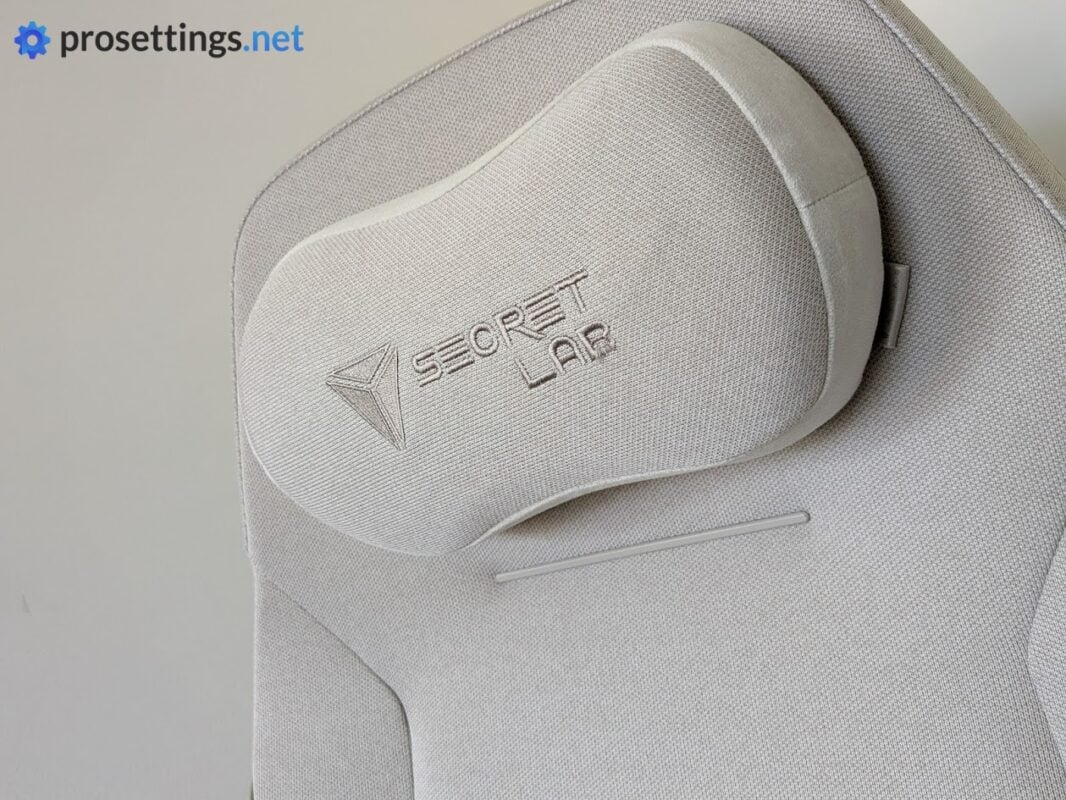
The included neck pillow feels great. It attaches to the chair via magnets, and it stays in place perfectly, even if you’re someone who moves their head around a lot. I also like the firmness of it. It is soft enough to allow your neck/head to sink in until you’re in a comfy position, and then it holds its firmness so that your neck does not ‘go through’ the pillow.
I have no remarks here. I love the pillow and the implementation of it.
Everyday Usage
Upholstery and Breathability
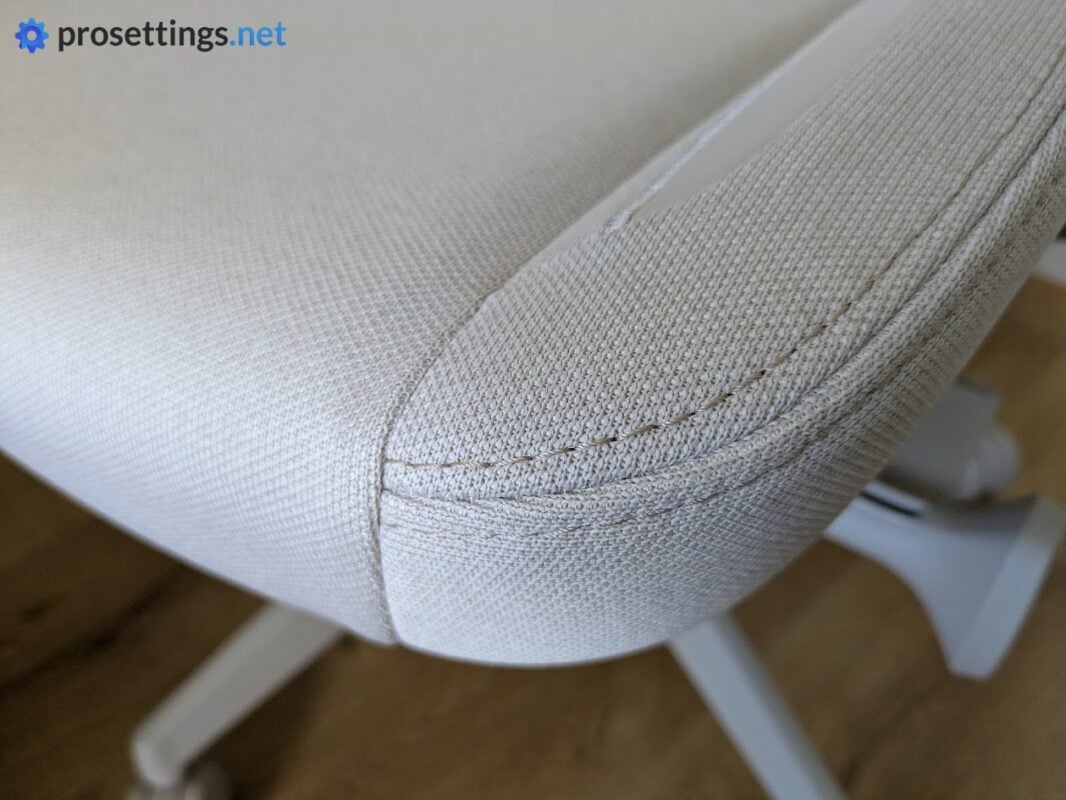
As mentioned, I went with the Dune+ model. That comes with Secretlab’s SoftWeave Plus fabric. I tested this before and I really like it. It’s breathable on hot days, comforting on cold days, and it looks and feels very premium. In the past, I described it as similar to the fabric that you see on running shoes, and I still stand by that. It’s flexible, but strong, and goes back to its original shape the moment you move out of the chair.
I also have friends who have had SoftWeave chairs for years at this point, and I can say that it’s a durable type of fabric. Obviously, you shouldn’t grind across the chair while wearing sharply-studded pants, but if you take care of your chair, it’ll last you quite a long time.
I’m a big fan of SoftWeave, and to me it’s one of the better upholstery materials out there in the (gaming) chair world. Stitching and accents are also done well across the entire chair, so I have no remarks here.
Build Quality
Despite using ‘cheaper’ materials than the flagship Titan EVO line, I can’t say that the Secretlab Atlas feels cheap or subpar. It just feels different. Instead of a big, robust, heavy-duty gaming chair (Titan EVO), the Atlas feels and looks lighter and more refined.
In terms of the build quality, everything checks out. There’s no creaking, even after weeks of usage, and the whole chair feels very consistent. By this I mean that the backrest locks in place without having any play, the seat doesn’t wobble, and so on.
All in all, this is a really well-built and (in my opinion) well-designed product. I did not find any points where it felt like the engineers had cut corners or anything like that.
Ease of Use
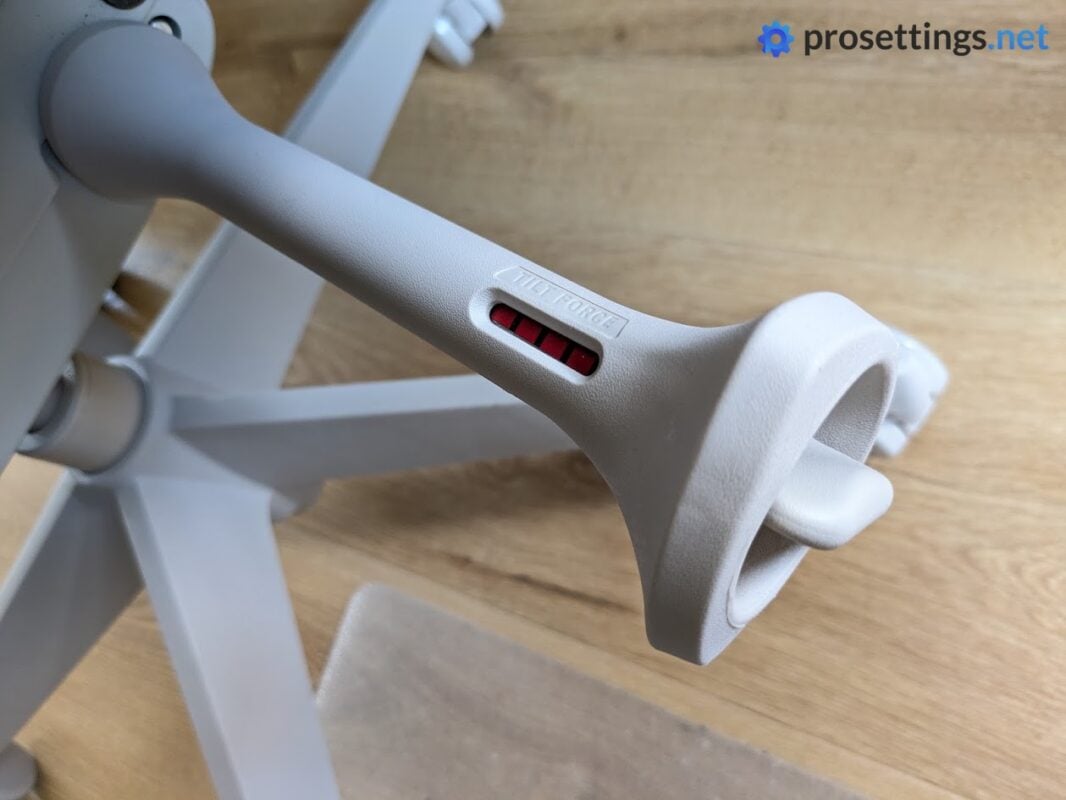
All controls for the Secretlab Atlas are easy to use and find. The controls are even marked, which makes adjusting the chair even easier. They all work as they should, and I had no issues dialing in the chair.
I did have some issues after I dialed in the chair, though.
For example, they made it easier to adjust the tilt force by moving the adjustment dial to the side of the chair rather than the traditional location at the bottom of the seat, but you do lose some modularity by doing that. And with only four levels, it’s more difficult to get a perfect tension. That’s important to note because sadly, even at the toughest setting, I find myself leaning back without wanting to do that.
I am two centimeters taller than the recommended height of 178cm, but I am well below the recommended weight limit (100kg) so I think I’ll be far from the only user having this issue. It’s a shame because I like to leave my chairs unlocked with a relatively high tilt tension (so that I need to put a bit of force to ‘swing past’ the tipping point, but it remains where I want once I’ve done so) and I can’t really do that here.
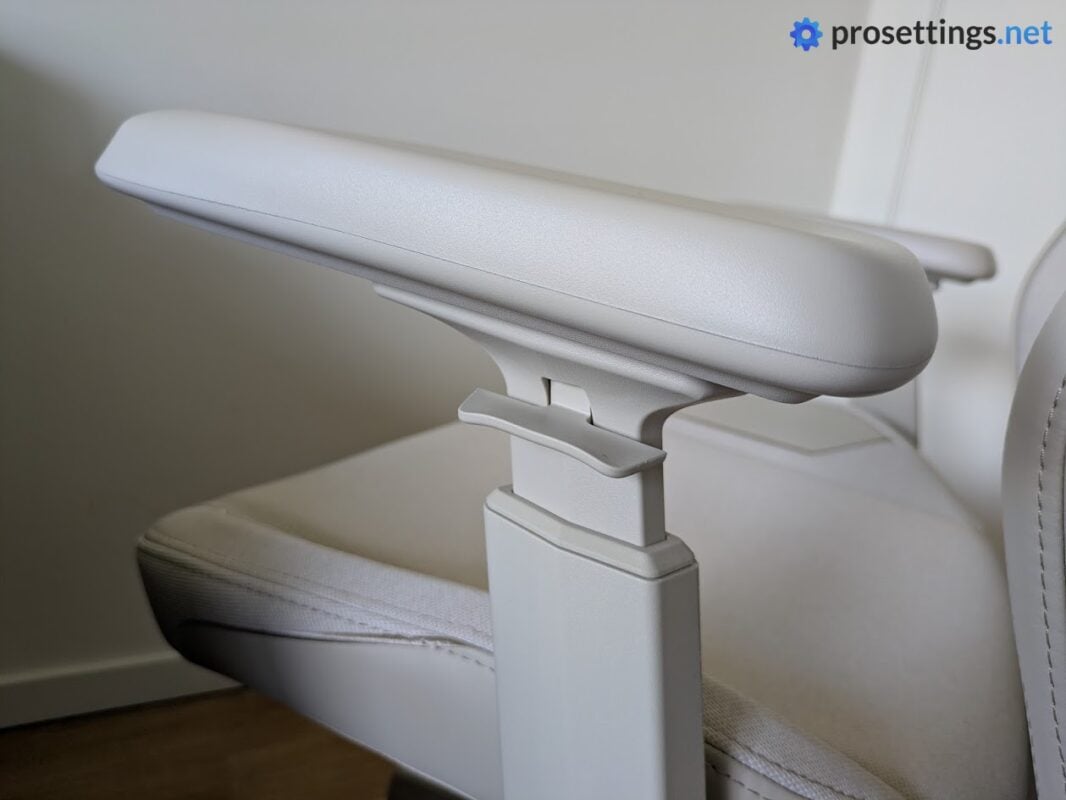
The armrests also leave something to be desired. The height locks as it should, but the forward/backward movement function does not have a lock. So quite often, I found myself accidentally moving the armrests when I simply wanted to reposition myself or get out of the chair. I find the decision to leave these ‘unlocked’ extremely puzzling, since the Titan EVO has fully locking armrests.
Conclusion
The Secretlab Atlas is an extremely interesting product. It does a number of things better than the Titan EVO but it also does some things worse.
For example, I really like the synchronous tilt mechanism of the Atlas, and the adjustable seat depth is a welcome addition too, but then the Atlas ditches the adjustable lumbar support that’s found on the Titan completely in favor of a solid lumbar curve.
The labeled controls are also really nice, but the tilt force tension does not go high enough for me, so I can’t use the chair unlocked.
And then, there are the armrests. The brand more or less figured those out years ago with the Titan EVO, yet for some reason they decided to make these not fully lockable, which leads to slip-ups when readjusting yourself in the chair.
They probably made some of these decisions to make the Atlas and Titan EVO clearly distinguishable, but I think they went too far in some aspects. It might just be me, but given their similar aesthetics and design styles, the Atlas feels like a strange, almost experimental version of the Titan EVO rather than a completely new chair.
If I made the decisions at Secretlab, I would combine the best aspects of the Atlas and Titan EVO into one pretty much perfect gaming-style chair, and then move on to a radically different design for their next product.
But I don’t make the decisions at Secretlab, and, when looking at the chair itself, it’s a really stylish, well-built chair with a bunch of super interesting features. It’s not fully perfect, but if you’re looking for a quality chair from a reliable brand that doesn’t scream ‘I’m for gamers’ then this could be it.
This product was received for free from the manufacturer and given to our reviewer to test and review. Brands and manufacturers have no editorial control over our reviews. For more information, check out our review FAQ.
Former semi-pro gamer turned writer, product reviewer, and community manager.

