Introduction
A gaming chair won’t improve your aim or reaction time. But it will affect whether your back hurts after a 6-hour marathon. So, getting a chair that suits you is of the utmost importance if you’re going to be spending any serious amount of time behind a desk. There’s a lot of noise surrounding chairs in general, so in this article we’ll try to answer any and all questions surrounding the subject, and we’ll spice it all up with pro usage data.
If you just want the short answer: most pros sit either in a Secretlab Titan Evo (~32%) or a Razer Iskur V2 (~28%) but that’s mostly because those two brands nailed the basics: adjustability, durability, quality at a price most people can stomach. Let’s dive in for some more in-depth talk!
A gaming chair is an office chair
Before we properly get into things, it’s important to note that a ‘gaming chair’ (which is most often a racing-style chair) is quite simply just a type of office chair. We have a dedicated article where we go deeper on this subject, but it’s good to note that a ‘gaming chair’ is a specifically marketed and designed type of office chair. It’s not a different type of product.
Something that’s often said online is that racing chairs should not be used for sitting at a desk. And that’s true. A real racing seat serves a completely different purpose than an office chair. However, the good gaming chair brands are basically creating office chairs that happen to look sporty to appeal to a certain demographic. They’re not actual racing chairs. It’s no different from a sporty sedan borrowing styling cues from a bona fide race car. It might look like a track-ready car on the outside, but underneath it’s still a comfortable everyday car that you can drive to the grocery store.
So if your question is ‘should I get an office chair or a gaming chair,’ our answer would be ‘it doesn’t matter; just look at the features.’

Things a good chair should offer
A good chair should have the following:
- Adjustable seat height – This is critical to achieve good posture.
- Lumbar support – This is important for longer sessions. It supports your back and follows your spine’s natural curvature. This is preferably adjustable rather than fixed.
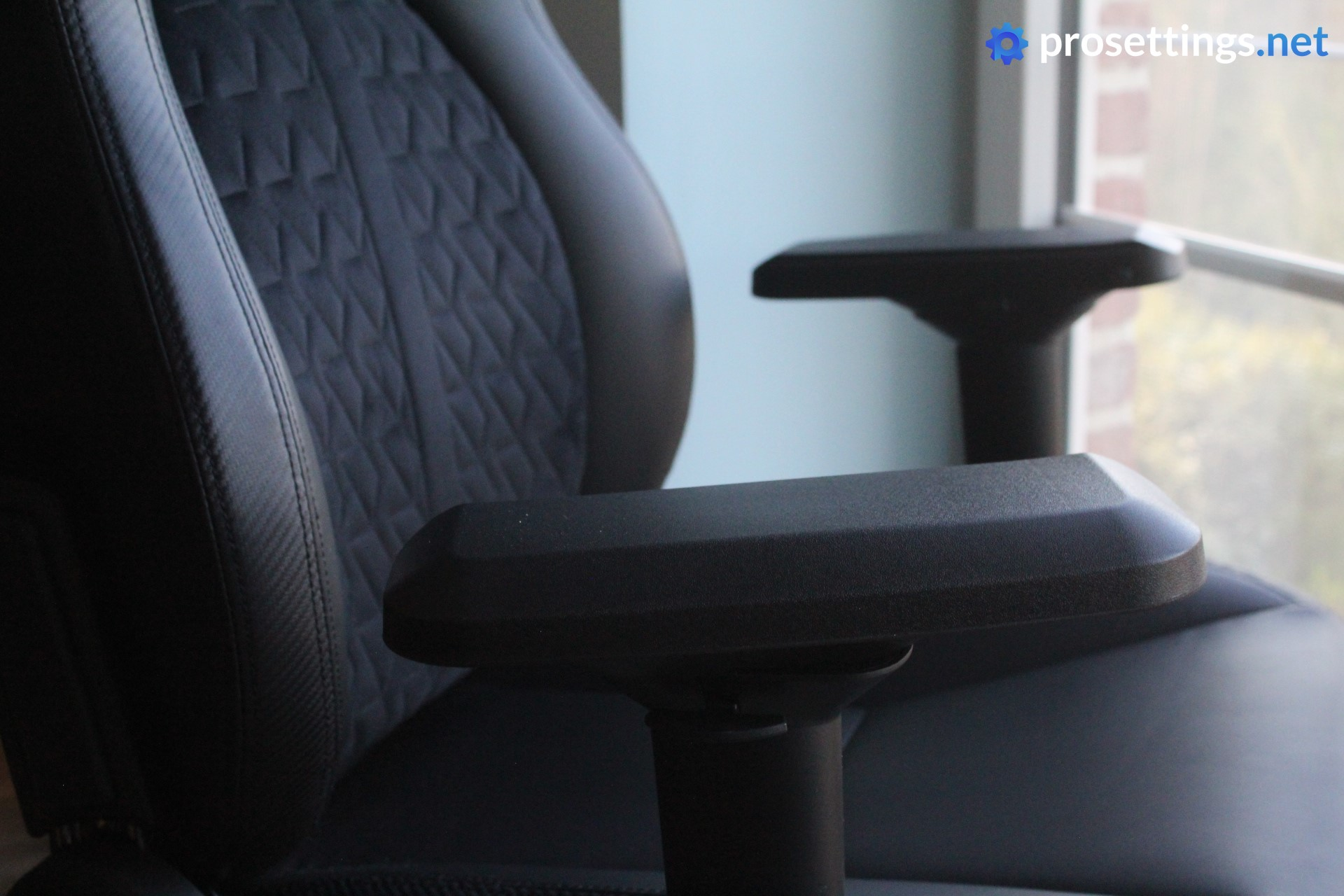
- Adjustable armrests – If there are armrests on the chair, they should at least be adjustable in height, although ‘4D adjustability’ is nicer.
- Reclining backrest – This can help achieve a comfortable seating position. A fully reclinable backrest also allows you to ‘lounge’ in the chair; this isn’t great for long-term health, but it can be fun to relax after a long session.
- Five-star base with good casters – Being able to position the chair relative to your desk is very important in achieving good posture, so the chair should have a reliable base and smooth wheels.
- Curved edges – Hard or sudden edges can cut off blood flow, so smooth ‘waterfall’ edges promote better circulation in your legs.
- Reclining mechanism – This helps you lean back without having to adjust your seating position. It helps with natural posture shifts throughout the day. Preferably, this mechanism also has a tilt-lock function.
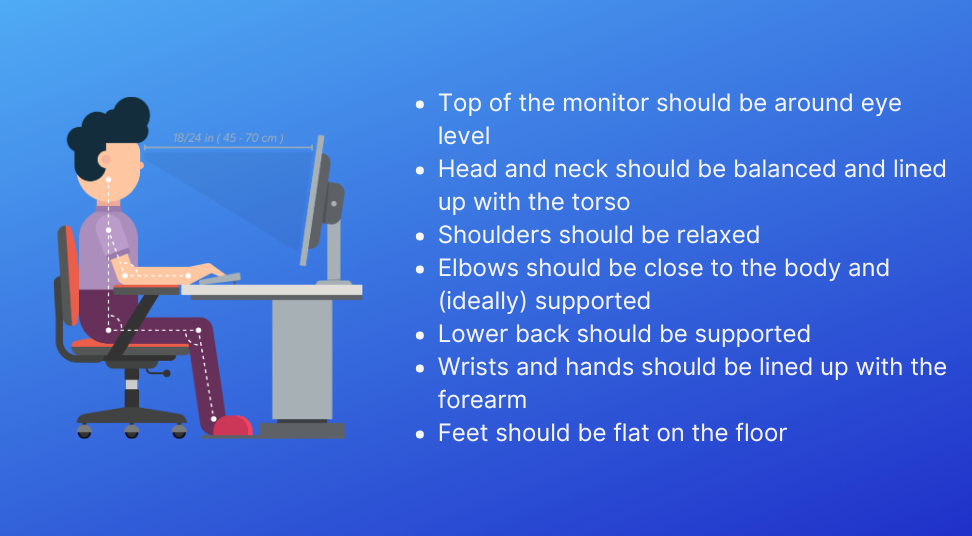
In essence, a good chair should allow you to achieve perfect posture like in the image below and support you as you move around naturally during the day.
Price
A chair uses a lot of materials and is a large, heavy item. As such, there’s a certain cost associated with these products. So, unfortunately, you’re generally not going to find many great chairs at the sub-$200 point. As a very general rule, the price tiers (based on MSRP) break down as follows:
- Under $200 – Mostly no-name chairs that will sag, creak, or break within a year or so and cash-grab brands. If you’re shopping here, it’s very important to stick to known brands with actual warranties. The IKEA Markus is a great example of a chair around this price that’s well worth your money, but beware of the many, many bad deals in this price tier.
- $200-$400 – The budget tier where you can find some pretty good deals. The advice is the same as with the previous tier: make sure you’re buying from a known brand or you have looked up reviews before committing to your purchase. You mostly won’t find full adjustability in every aspect, and the chair will generally have to cut some corners with materials here and there, but you can find some great deals here.
- $400-$800 – We consider this to be the ‘sweet spot’, and it’s also the tier where the most popular chairs in pro gaming live. The Secretlab Titan Evo, for example, sits almost right in the middle of this tier. Expect full adjustability, more premium materials, and longer-lasting components. This is the budget we’d recommend if you’re looking for a really good chair.
- Over $800 – This is where the real designer stuff lives, or chairs with luxury materials and finishing. Here, you’ll find classics like the Herman Miller Embody. Materials here are generally top notch, you get multi-year warranties, and very fine adjustability. This is the tier to consider if you spend 8+ hours a day in your chair. It’s absolutely worth spending a little bit extra in that case.
Obviously, the above is a very rough guideline. But if you’re considering a new chair, it’s good to know what you’re getting into.
What do the pros say?
If we’re to look at what the pros are doing, it breaks down as follows:
| Rank | | Perc. |
|---|
| 1 | Secretlab Titan Evo | 32% |
| 2 | Razer Iskur V2 | 28% |
| 3 | Blacklyte Kraken Pro | 4% |
| 4 | Logitech G x Herman Miller Embody | 4% |
| 5 | Herman Miller Embody | 4% |
Note: only players with an active chair listing were counted.
So, according to the pros, you should go with a Secretlab Titan Evo or a Razer Iskur V2. The Titan Evo is the current favorite, and is used by TenZ, ZywOo, ropz, XANTARES, and others, while the Iskur V2 is a relatively new favorite that’s used by the likes of device, rain, and johnqt at the time of writing.
To us, these choices make a lot of sense. Sponsorships here and there aside, they are also adjustable in all the right ways and meet all the requirements we outlined earlier in this article. We have also tested these chairs and we liked our experiences with them, so they are absolutely quality chairs.
But it’s important to note that this does not mean that they are objectively the ‘best’ chairs for everyone. Every person has a different body type and different preferences. The Titan Evo, for example, is the most used chair in pro gaming right now, but it has quite a firm foam. If you’re someone who doesn’t take well to that, it won’t be the chair for you.
That’s why it’s important that you listen to your own body when considering a chair. Looking at what pros, reviewers, and other people online are saying can be a good help in your decision, but it shouldn’t be the deciding factor.
Consider how you will use it
One often forgotten factor when considering a chair is how you’ll use it.
A chair will obviously be used for sitting, but there’s a huge difference between a chair that’ll be used for a quick match or two (~1.5 hours a day) and a chair that’ll be used for a full-time job and gaming (8+ hours a day).
To make it a bit more concrete: if you’re putting in 4–6 hour competitive sessions, you want something that holds up under sustained sitting. The Titan Evo and Iskur V2 are popular in this scene for good reason: they nail the basics and they last, without costing an arm and a leg.
If you’re someone who’s at a desk for 8+ hours daily (work plus gaming), it’s worth considering a higher-tier option like the Herman Miller Embody or Steelcase Leap, though. Those are pricier, but the granular adjustability and 12-year warranties pay off when you’re using it that much. For shorter, more casual sessions, almost any quality chair from a reputable brand in the $200–$400 range will be fine.
Furthermore, you should consider what you’re looking for out of a chair. If you’re gaming in an attic where it regularly gets hot, look for breathable fabrics or a full mesh chair. If you like to kick back and lounge, look for a chair that can recline very far without falling over. And if you prefer a very firm and rigid seat, look for that. Consider your preferences and intended use case.
Materials
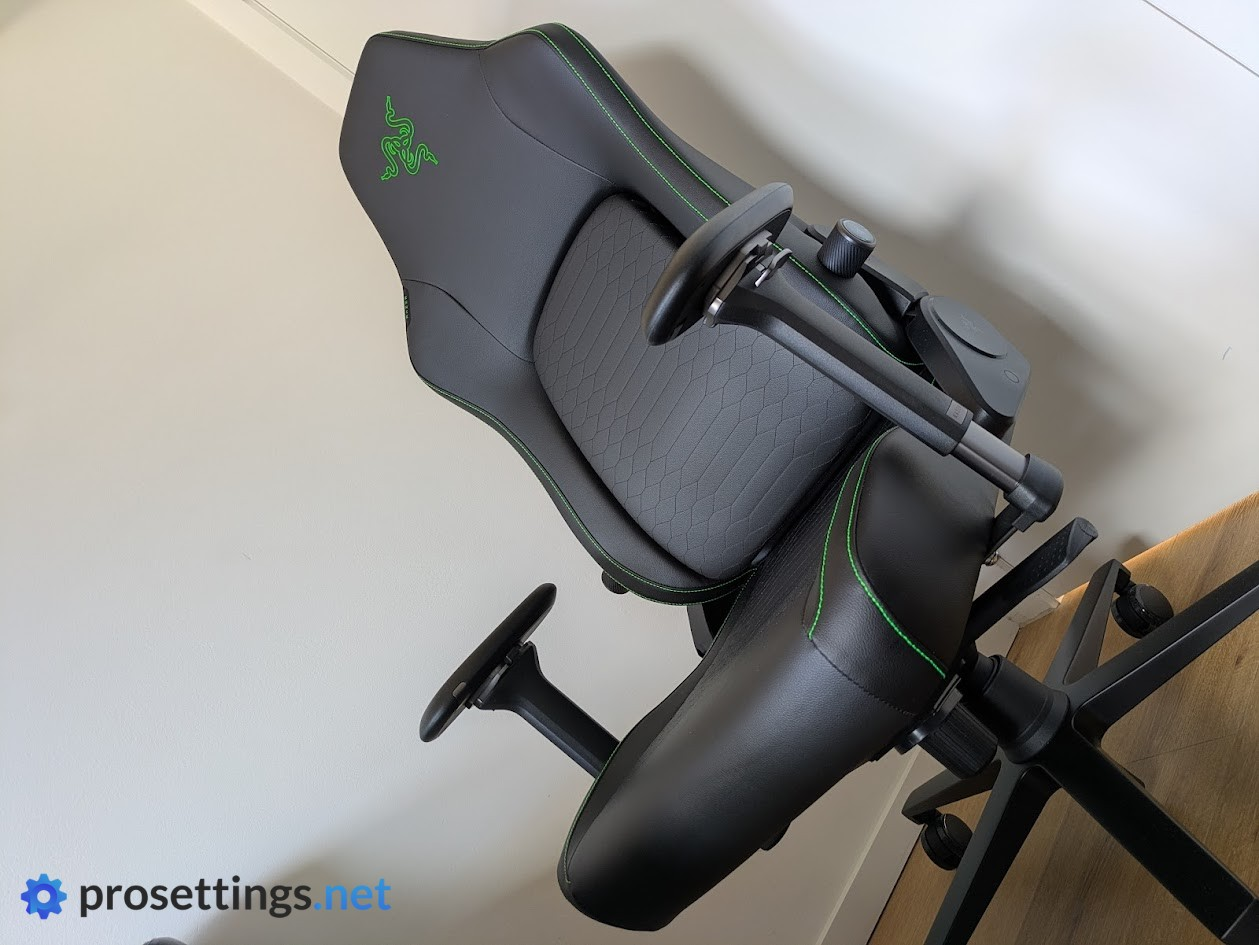
There’s a common assumption that (real) leather chairs are inherently more premium, and that mesh chairs are ‘just office chairs.’ Neither is always true. The material a chair uses says more about its intended style and use case than its overall quality
Here’s a rough breakdown of the most common materials and what they’re actually like to live with. Remember: there’s no ‘best’ here in terms of materials. It’s mostly down to preference.
Real leather
A premium option that ages beautifully if you take care of it. But it’s (very) expensive, can get sticky in the summer months, and doesn’t really breathe. You also need to maintain it beyond simply vacuuming it if you want it to last. It’s a premium material for sure, but that doesn’t automatically make it the best upholstery choice. Especially if you sweat a lot or you live in a hot climate, a leather chair can be a subpar choice.
Artificial leather
The most common material used on gaming chairs by a wide margin. The quality varies enormously between brands, so there’s no way to say whether this is a good or bad choice.
Cheap PU leather will peel and crack within a year or two, while better-quality versions on chairs from reputable brands can last for many years without issue. The main advantage of (quality) artificial leather is that you get the same feeling and looks as with real leather, but at a much more affordable price. Top artificial leathers can also have enhanced breathability, flexibility, and so on. Generally, though, artificial leather suffers from the same drawbacks as the real thing: it’s not very breathable and can get sticky.
Fabric
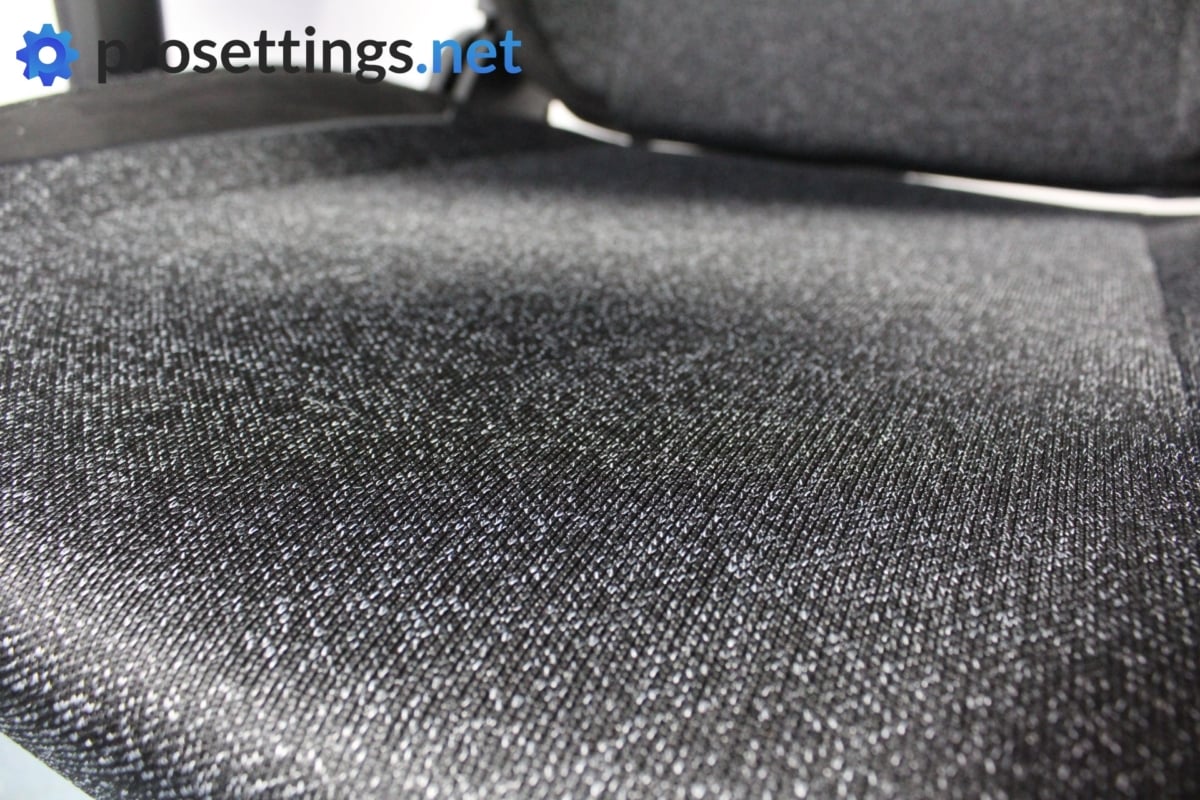
Fabric is an underrated upholstery material if you ask us. It breathes better than leather, it doesn’t get sticky, and it generally ages more gracefully than most faux leathers.
The downside is that it’s more difficult to keep clean. If you have a lighter fabric chair, it can stain over time (just like shirts and the likes). And, if you spill something, it can be very difficult to fully clean the fabric since it’s much more porous than (faux) leather.
Most quality gaming chair brands offer fabric versions of their flagship models, and it’s often the version we’d recommend for daily use unless you specifically want the leather look.
Mesh
Mesh is absolutely the best for breathability. If you live somewhere hot or you tend to overheat during long sessions, this is the material to go for. Mesh is also very light and stretchy, making it so that brands can use more defined chair shapes and lumbar supports. A lot of high-end chairs use mesh for this reason.
The downside is that mesh is not very firm; if you like a firmer seat, mesh won’t float your boat. Lower-quality mesh chairs can also start ‘sagging’ as the material loses its stretch, leading to a compromised sitting position. Additionally, a lot of people also dislike the aesthetics of a mesh chair.
Common mistakes
A gaming chair is a big purchase. Sadly, a lot of people make mistakes when buying one. We’ll outline some of the common mistakes here.
Buying based on looks alone
Looks are very important. A chair is a large piece of furniture that demands attention in a room, after all. But looks absolutely aren’t everything. Consider how the chair feels and works for you first, then decide if you can live with the looks. Many brands sell ‘blackout’ versions of their chairs, and many popular options are available in tons of versions, so you’re quite likely to find something that suits your setup. Just don’t buy a chair based on looks alone.
Trusting a lumbar pillow as lumbar support, or trusting a fixed support
Many lower-tier chairs offer a lumbar pillow (usually on stretchy bands) as the primary means of support. A pillow is absolutely not the same as a dedicated, adjustable lumbar support. Pillows shift position and lose their shape, for one. Furthermore, they cannot be adjusted, so if the pillow doesn’t feel good to you, you’re out of luck.
That’s also why you should be very careful with fixed lumbar supports. If it doesn’t work for your body, the whole chair becomes unusable for you.
We would always recommend adjustable lumbar supports if your budget can swing it.
Going too cheap ‘to see if you like it’
With some products, it can be tempting to get a budget version to see if you’ll like the more expensive version. You can always try a cheap clone of a popular mouse shape to see if it works for your hands, for example.
With chairs, it’s a different story. Cheap chairs (as explained) often lack quality in major areas, and they are also expensive or impossible to return in case you don’t like them. Even if you decide to keep the ‘trying it out’ chair, you’ll need room to store it later on.
When it comes to chairs, we definitely recommend doing your research, and then going for the big ticket item right away.
Falling for ‘ergonomic chair marketing’ without checking
The word ‘ergonomic’ gets slapped on basically every chair listing but it’s meaningless on its own. You should look for the actual features (outlined earlier in the article) to determine how ergonomic it actually is. A chair with a fixed lumbar support and rough edges can have ‘ergonomic’ in its marketing materials, but it’s not a very ergonomic chair in practice.
Ignoring your body type
A chair has to fit you. If you’re a huge TenZ fan and you see that TenZ uses a Secretlab Titan Evo, you shouldn’t just rush out and buy one just like that. Always consider your body type. Getting a chair that’s too small for you (or too big) will not just be uncomfortable, it can also negatively affect your long-term health if you use the chair often.
Conclusion
A chair is not going to give you a highlight reel, and it won’t improve your gaming skills. So in that sense, it can be seen as a bit of a boring purchase. But it’s also one of the few products you’ll genuinely use every single day for years on end. Furthermore, a bad one will quietly make your life worse in ways you won’t notice until your back starts complaining.
Hopefully, by this point in the article, you have a much clearer picture of what to actually look for. You know the feature checklist, you know roughly what to expect at each price point, you know what the pros are doing and how to contextualize this, and you know the common traps to avoid.
Beyond that, it really does come down to your body, your budget, and how you’ll use it. There’s no universally correct ‘best gaming chair’ for everyone. But you’re now in a much better position to find the one that’s right for you.

