Introduction
Go into any online community where someone asks for a chair recommendation and you’ll see the same reply within minutes: skip the gaming chairs, and buy a used mesh office chair. It’s become the default answer, as if it’s an undisputable fact.
But is that true? Is mesh the superior option by default, or does a quality gaming-style chair offer enough to stand on its own as a real, reliable option? In this article, we’ll go a bit deeper on that question. We’ll go over what actually goes wrong with chairs over long sessions, why mesh isn’t the automatic gold standard it’s assumed to be, and how brands like Secretlab approach the problem differently. In Secretlab’s case, that approach has meant working with an independent Ergonomics Advisory Board and testing against established industry standards before settling on foam over mesh.
Why mesh chairs aren’t always the best
Mesh has a very good reputation, and it’s well-earned. It’s breathable, light, and some of the most well-engineered chairs use mesh. But ‘mesh’ is not a synonym for ‘ergonomic’, and the material has some specific properties that are worth understanding before you go for a purchase.
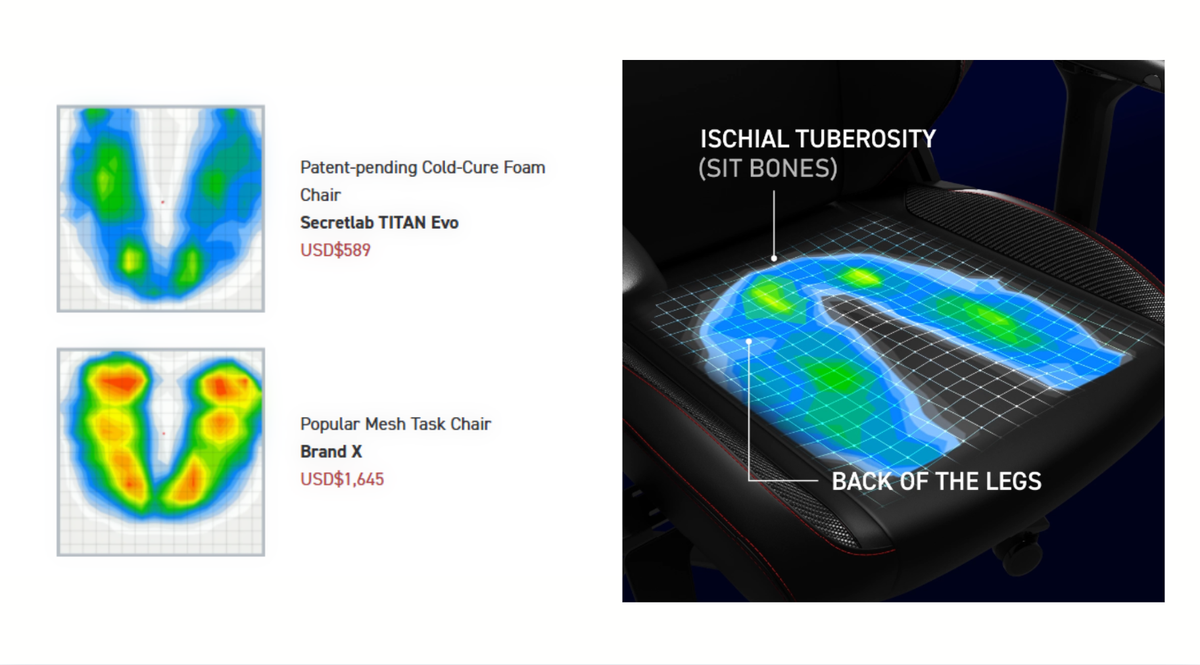
Before we even get to wear and tear, it’s worth noting that mesh has an uneven support profile built into the design itself, and that it’s not just something that shows up with age. Because the material is stretched across a rigid frame (like with a hammock), the tension isn’t the same everywhere. It’s tightest, and least forgiving, right where the mesh meets that frame. If your legs happen to land on that stiffer ‘boundary section’, you get a spot of concentrated pressure. That’s not ideal for optimal support.
How mesh changes over time
Over time and under load, the support of mesh decreases, because of the fact that the mesh stretches out. As the mesh loses tension, it starts to sag, and that sag usually doesn’t happen evenly.
What happens then is that there are small, concentrated areas where the material has given way and the frame or the edges start doing the supporting instead. Usually, those points show up under the thighs and around the lower back, which are exactly the places where you don’t want localized pressure. That’s what causes the numbness and the ‘my legs are asleep’ feeling that a lot of mesh users eventually report.
Cheaper mesh chairs can show this issue quite quickly (some even after a couple of months) which is a major reason why mesh doesn’t automatically mean ‘better’ in the context of an office chair.
To be clear: none of this makes mesh bad. But mesh does have drawbacks and is not inherently better, contrary to what you might think.
How foam can outperform mesh
Secretlab’s approach starts from a simple idea: a chair isn’t furniture, it’s equipment. The job of the chair isn’t to feel nice for five minutes or give you a couch-like sensation. That’s what your couch is for. A desk chair should actively hold you in a position your body can sustain for a full day. That means designing for structure and for micro-movement rather than for sink-in comfort.
Mesh essentially pulls in one direction, whereas foam responds to your body’s weight in every direction at once. A properly engineered foam seat spreads the load more evenly across the whole surface, which reduces pressure peaks instead of just moving them somewhere else, like what can happen with mesh.
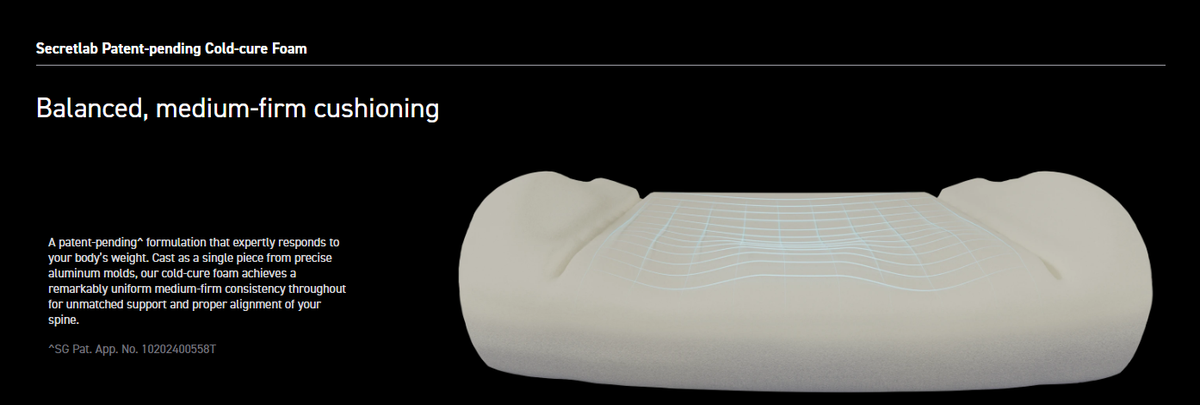
Secretlab uses a patent-pending cold-cure foam that’s cast as a single piece in aluminum molds. Casting the foam as one piece produces a tightly packed, high-density structure, which is what eliminates the sagging that you get with standard cut foams (which usually come in under 50 kg/m³). Density is essentially the property that determines whether the seat you’re sitting on in year three is the same seat you bought in year one. That’s very important for consistency and longevity.
Why soft foam can disappoint
If you spend some time reading user reviews and experiences with (gaming) chairs, you’ll notice how it’s pretty much impossible to judge a chair based on a couple of hours of using it. Almost nobody complains about a chair on day one; the complaints (if there are any) show up after a couple of weeks.
The most common version of this comes in the form of what one would call ‘the cushion trap’. A chair with thick, soft foam feels fantastic when you first sit down on it. It feels comfy, couch-like, and like a warm hug. That plushness could have even been the defining factor that sold the chair. But soft foam compresses, and once it compresses, it stops supporting you. Users describe the same set of issues over and over: the seat feels great for an hour, but by the end of a long day, the padding has gone flat, and they’ve been slowly sliding into a slouched position without noticing. So while you might prefer a softer chair in the first five minutes, your back will not feel as thankful after a long day’s grinding.
Why firmness matters
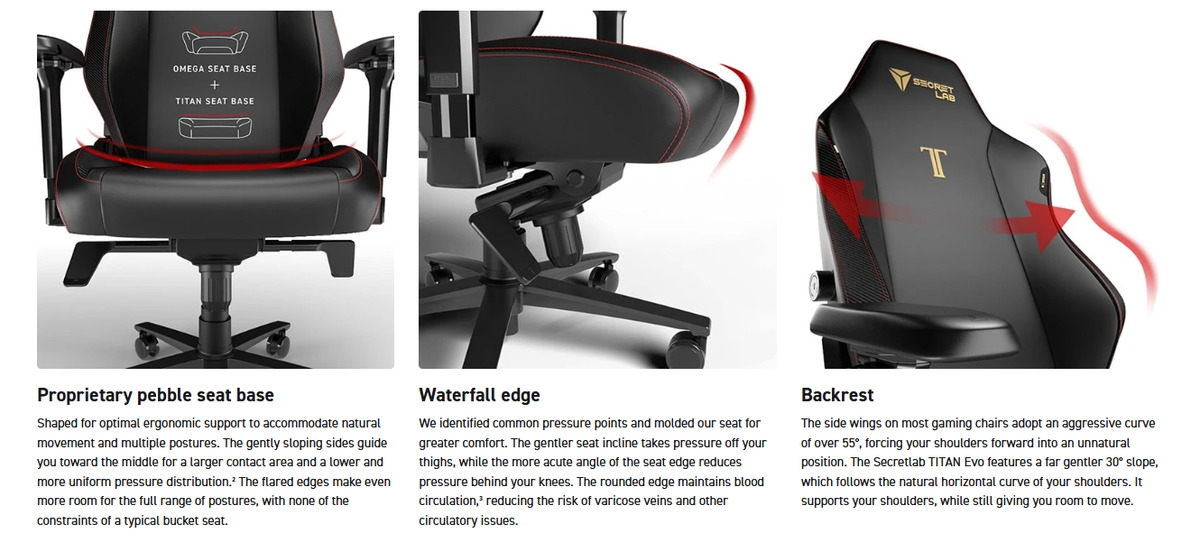
Most proper ergonomic chairs are firmer than people expect. That firmness isn’t there to punish you, nor is it a sign of a badly made chair. It’s there because a seat that lets you sink in it completely also makes it harder to shift, reposition, and move your legs, and you need to be able to do all of those things over a long session.
So if you’re evaluating a chair, five minutes of sitting tells you almost nothing. But many buyers don’t know that, and they go by what they experience in the store. It’s the biggest reason people end up with a chair they don’t like. They confuse momentary snugness with long-term reliability and comfort.
Ultra-soft foam not only compresses a lot, it can also bottom out. Once you’ve compressed the padding all the way, you’re effectively sitting on the base of the chair with a layer of worthless foam in between. At that point, your weight is being carried by a hard surface with no weight distribution. This inconsistency can cause all kinds of issues, including spinal misalignment.
And it’s not only a problem once it bottoms out: foam that’s too soft to begin with often isn’t doing much supporting even before that bottom out point, which means your postural muscles end up doing the heavy lifting instead. That’s a big part of why an overly plush chair can leave you more fatigued at the end of a long session, and why task chairs often don’t have that couch-like sensation: it’s not good for you.
The medium-firm approach that Secretlab utilizes is engineered to compress a certain amount and then stop, so that the support you get in hour eight is the same support you got in hour one.
Support as you move
Just as important as how the foam distributes load is how it keeps up when you move. Sitting perfectly still for hours isn’t realistic; human bodies aren’t built for this, and even the most posture-perfect sitters will not stay in the same position for hours, so a chair needs to respond to the small posture shifts and micro-movements you make throughout the day without thinking about them.
That’s where the cold-cure foam works best: it rebounds quickly rather than slowly, so the support doesn’t lag behind you when you lean forward, shift your weight, or settle into a new position. A well-distributed seat is also what allows you to keep making the small adjustments and shifts that keep you from stiffening up, without compromising your posture.
To further support this claim, Secretlab, in partnership with ergonomics researchers from UC Berkeley’s Human Factors Ergonomics Lab, conducted an eight-hour (a working day) blind test where they compared the TITAN Evo against a premium mesh chair and found no significant difference in comfort, pain, or fatigue between the two. Foam even showed better results in regards to computer-based tasks specifically, which is interesting to note.
It’s quite interesting that some ergonomic chair makers have started blending the two materials (for example, a mesh surface over a foam layer) specifically to borrow foam’s more even support without giving up mesh’s breathability entirely. That means that manufacturers are privy to the fact that foam can do things mesh by itself cannot.
Gaming Chair or Office Chair?
The gaming chair versus office chair debate is mostly a debate about aesthetics, to be quite frank. Sure, there are a lot of subpar chairs trying to get a piece of the ‘gamer’ pie by putting out badly made products to cash in on the hype.
But a quality gaming chair can be as good as any mesh office chair for prolonged usage. What actually matters is the following: does the seat still support you after nine hours, does the material hold its shape after a year, and can you move around in the chair naturally over the course of a session without fighting the padding or getting into awkward positions?
Mesh answers some of those questions well and others less well than its reputation might suggest. Soft foam answers almost none of them, no matter how good it feels in the store. Secretlab’s bet is that a structured, medium-firm seat built around density and pressure distribution answers more of them than either of the two mentioned above.
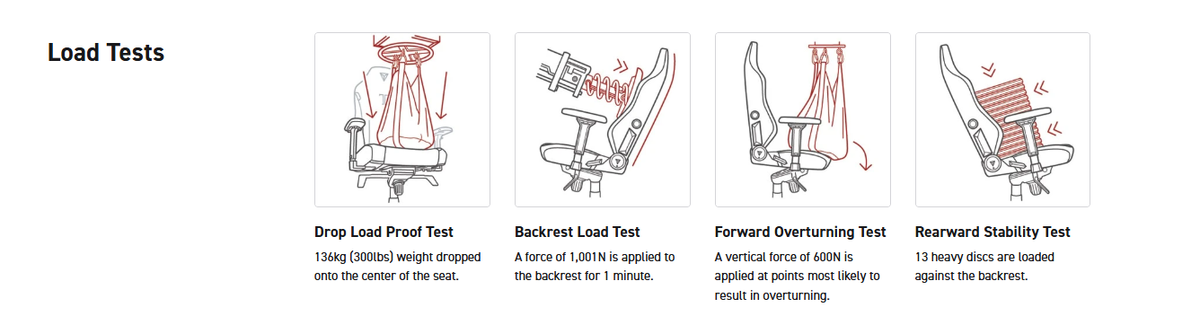
Breathability and durability
There are a number of reasons why people often recommend mesh chairs over non-mesh chairs. And it’s of course true that mesh offers a number of advantages over other upholstery materials. However, most of these advantages can be more or less equalled by quality engineering and design.
Mesh is, obviously, breezier than most other upholstery materials. As such, it’s often recommended as the only option for people who tend to run hot or who live in hot climates. But solutions like Secretlab’s SoftWeave Plus offer the breathability of fabric, all while keeping the structural benefits of having a foam-based chair. It’s an ideal compromise between consistency and airiness.
Low-quality leather (be it synthetic or real) can start peeling very quickly. We’ve all seen those images of chairs that look like they sat in the sun for three weeks straight. But high-quality PU leathers like Secretlab’s NEO Hybrid Leatherette and their NanoGen Hybrid Leatherette don’t suffer from these issues. These materials have been designed and iterated over time to last years, even when used in challenging conditions.
Adjustability and support
Mesh is stretchy and highly adaptable, so it’s commonly used in highly adjustable chairs. But that doesn’t mean that it’s the only option for people who want a lot of customization options. Secretlab’s 4D L-ADAPT lumbar system, for example, offers a wide range of lumbar customization, allowing users to set a support level that matches their body and preferences.
Many mesh chairs offer neck support, but due to the nature of mesh, the neck support is fixed to the back spine and thus usually cannot be moved. Secretlab’s magnetic pillow system allows for seamless and infinite adjustment, making it so that users can get a perfect neck fit.
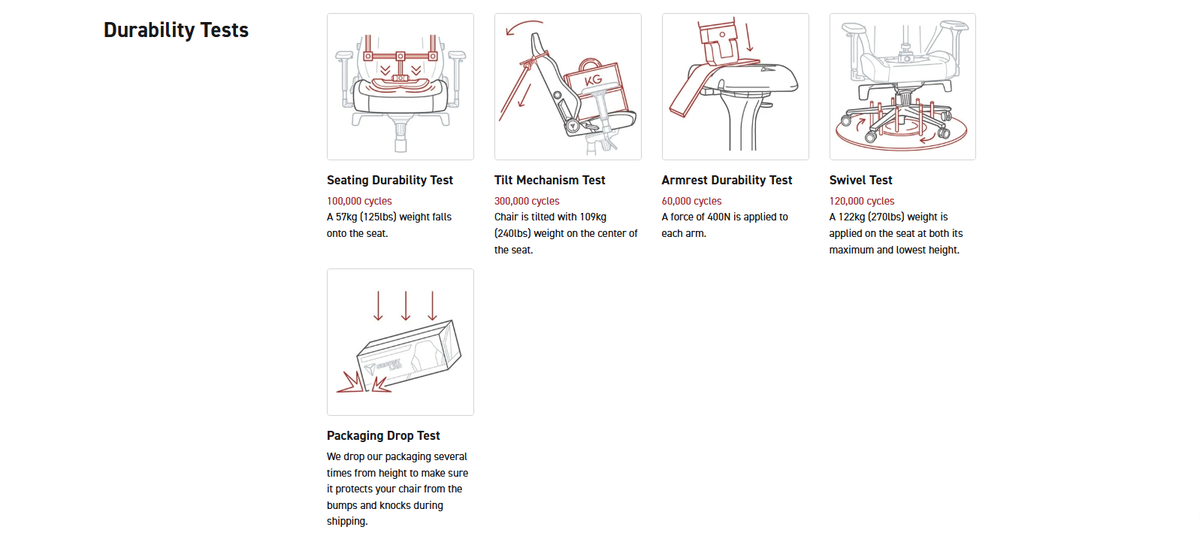
Secretlab’s chairs are made to be durable and last. The quality materials and foam choices make for a chair that does not degrade over time, making it a good investment for people who want a chair that stays with them for a long time.
Choosing your Secretlab chair
There are currently two main options to choose from if you’re going with a Secretlab chair.
The TITAN Evo is the flagship chair and the one you’ll see in pro setups and on tons of tournament stages. It’s the fuller-featured, more substantial chair, and it’s the one to look at if you want the complete version of what we’ve described above. If you’re looking for the best gaming chair for long hours and you want the version the pros are on, this is it.
The ATLAS is the alternative if you have a smaller workspace, or if the more subdued look of a traditional office chair suits your room better. It’s a more compact option that’s built on the same core engineering, so you’re not trading away the foam and the support to get the smaller footprint. It’s just a different execution of the Secretlab design ethos.
When a premium chair makes sense
As we’ve established, a good gaming chair is basically the same as a good office chair. So yes, a gaming chair can absolutely be worth the investment if it has the features and looks that you like.
Of course, if you’re in a chair for two hours a day, most of what we’ve discussed above is largely theory. Foam density, pressure distribution, long-term comfort, and the likes matter over long durations. If you’ll only be using the chair in very short durations, you can theoretically get away with more affordable options.
If you’re in a chair for eight hours or more, you should absolutely consider going for a premium option that suits you. The chair is the one piece of equipment you’re in physical contact with for the entire session, and it’s the only piece of equipment that has a direct effect on your body over the years. The cost per hour of use for a quality chair is lower than almost anything else on your desk if you’re a power user, so it’s an extremely sensible investment.
Why pros choose Secretlab
In our most recent gear analysis, the TITAN Evo accounted for around 30% of the pros we track, making it the most used chair in the scene. As a brand, Secretlab accounted for about a third of all tracked chairs.
This means that pros have widely adopted and accepted Secretlab’s approach to gaming chairs. If you’re playing games for a living, you don’t want a couch-style sitting experience; you want to have a chair that doesn’t wreak havoc on your body when you’re forced to sit down for hours every single day. With esports getting more and more professional each day, teams are starting to pay a lot more attention to the way their players sit and move, so getting a good chair is a big part of that.
Obviously, we should also mention that sponsorships exist, and they do have some influence on what you see on stage. But if you browse the pro lists, you’ll find plenty of players using chairs from brands their org isn’t signed with, and the overall distribution has stayed fairly stable across our reports. Furthermore, Secretlab has built a good reputation among gamers as the standard gaming chair brand.
In the end, a high quality ‘gaming chair’ like the Secretlab TITAN Evo is an ergonomic chair and a gaming chair at the same time, and it does the office chair job for the same reason it does the ten-hour scrim job. The people putting in those ten hours for a living mostly sit in a Secretlab, so there’s definitely evidence to suggest that it does its job really well.
Whatever you end up buying, judge the chair after a long day of grinding/work, not on minute five.


