Introduction
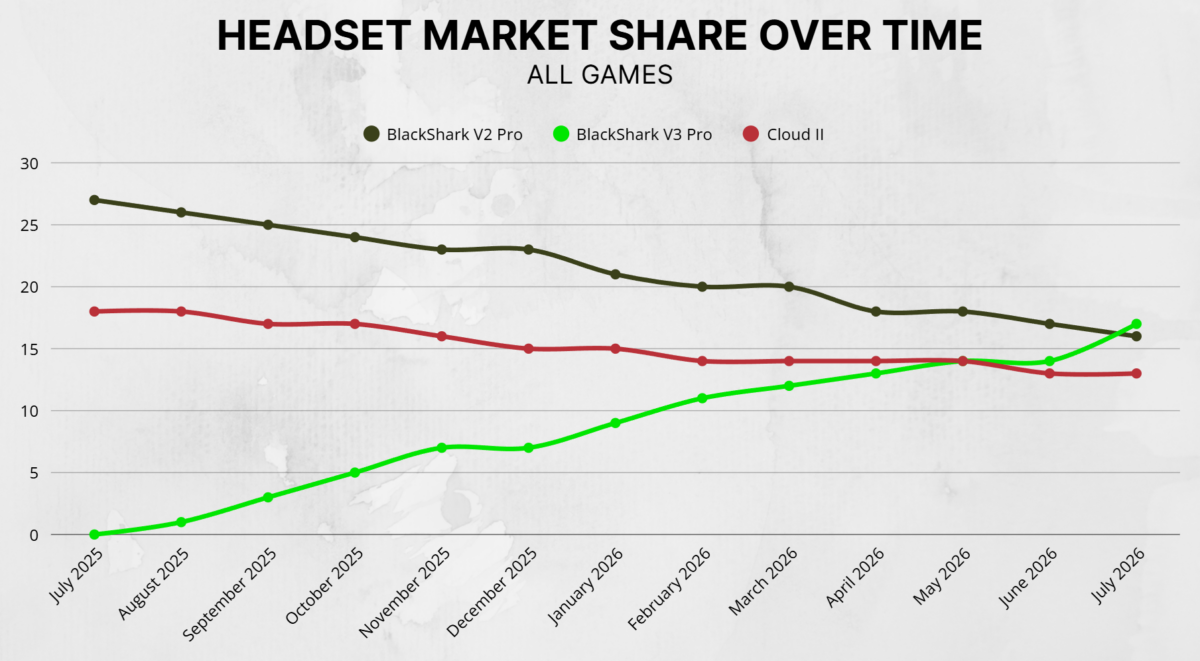
Around two years ago, we wrote about how the Razer BlackShark V2 Pro became the most used headset on ProSettings.net, ending the HyperX Cloud II’s years-long reign. Since then, the amount of BlackShark users only went up, to the point where it’s now the undisputed #1 headset line on the website by a large margin.
A product that achieves that level of dominance will mean that any succeeding products will be met with increased scrutiny. Will it live up to the predecessor? Can the engineers make worthwhile updates without touching on the core of what made the original so popular? With the BlackShark V3 Pro, the people at Razer seem to have done it. The newest version has already convinced over 300 pros to make the switch to date, which means that it’s the new most-used headset on the website.
In this article, we’ll do a deeper dive into what makes these headsets so popular, and what the V3 brings to the table over the V2.
We updated this article ten days after release due to the fact that the V3 Pro surpassed the V2 Pro as the most-used headset. Given how shortly after release this happened, we changed the article slightly to reflect this.
The standard-setter
As we mentioned in our article on the BlackShark V2 Pro, pros tend to like a certain style of headset. No fancy RGB lights, no extreme designs, and no gimmicks that make for a less reliable product. If we take a look at what we’ve seen in the headset space over the past decade, pros require a sturdy, no-frills build with a strong focus on (gaming-oriented) sound quality.
The BlackShark V2 Pro delivered on all fronts, and managed to also offer meaningful improvements over other popular headsets at the time. So naturally, the V3 Pro had to build upon that foundation without changing anything about the core experience.
The new version was an immediate hit. As you can see in the graph below, it solidified the grip that the BlackShark line has over the pro scene even further. The BlackShark V3 Pro also managed to overtake the HyperX Cloud II (gaming headset royalty) in a little under a year, moving the former king to third place.
And perhaps that’s no surprise. The Cloud II, iconic as it was and still is, has been out for over a decade now. It took the gaming market by storm thanks to its ‘performance over gimmicks and aesthetics’ approach, but technology has moved a lot since then. So when a headset with that very same approach enters the scene with all of today’s latest advancements and nails the important parts, it was always going to be a difficult battle for the Cloud II.
What Pro Players Wanted
Pros don’t shop for headsets the way most people do. They’re not chasing RGB, exaggerated bass, or a spec sheet full of numbers they’ll never use. What they want is more boring, and harder to get right: gear that disappears in use and never becomes the reason they lost a round.
Across the games where this headset gets the most use (Counter-Strike 2, VALORANT, Apex Legends), the same handful of priorities come up again and again. Players want clean directional audio so they can place a footstep or a reload by ear, a mic teammates can actually understand mid-fight, wireless that doesn’t add lag or drop out, and a fit that’s still comfortable on hour six of a practice block. On top of that, they need to stay locked in while there’s chaos around them, whether that’s a training room with their coach, a bootcamp, a packed LAN, or an arena stage.
That’s the input from Team Razer players, input that Razer used to create the latest BlackShark version. Hybrid ANC cuts down on the noise of a busy room, the Gen-2 TriForce drivers sharpen the audio cues that matter, the Full Band HyperClear mic keeps calls clear, and HyperSpeed Wireless Gen-2 keeps the connection fast and stable. None of it is reinvention. It’s Razer sanding down the rough edges instead of trying to reinvent the wheel, which is probably why the BlackShark line keeps showing up at the top of our usage stats.
Key improvements over the V2 Pro
In essence, all of the things that made the V2 Pro such a beloved headset are still there. This means that switching from a V2 Pro to a V3 Pro is a matter of upgrading rather than getting used to a whole new product. That’s important for pros, who are often hesitant to make huge changes to their setup if there’s no real reason to.
So what’s actually new on the BlackShark V3 Pro vs the V2 Pro? The major additions are Hybrid ANC, second-gen TriForce drivers, the HyperClear Full Band mic, HyperSpeed Wireless Gen-2, simultaneous 2.4 GHz and Bluetooth connectivity, and swappable magnetic ear-cup covers. We’ll cover the four main upgrades one at a time below. For the full hands-on breakdown, see our Razer BlackShark V3 Pro review.
Hybrid ANC explained
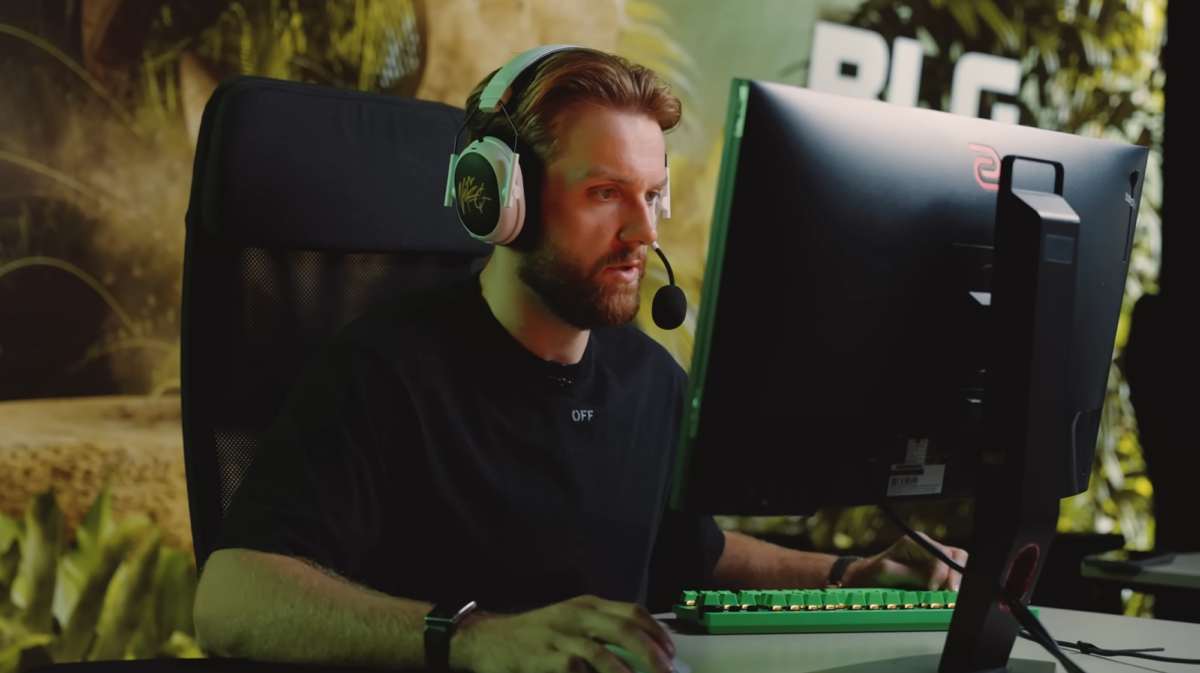
One of the most noticeable new additions is the Active Noise Cancellation system (ANC), which the V2 Pro didn’t have.
The hybrid ANC system uses outward and inward facing mics to identify and eliminate outside noises. It’s a “best of both worlds” type of technology, as feedback ANC only uses internal facing mics and feedforward ANC only uses external facing mics.
While ANC isn’t a requirement for a good gaming headset, it can absolutely help you focus better. If you’re gaming in a noisy environment, for example, ANC can help you focus on the sounds that matter, rather than getting distracted by the sound of a crowd, your neighbor’s lawnmower, or what have you. This is great for keeping your focus in the game.

Upgraded drivers explained
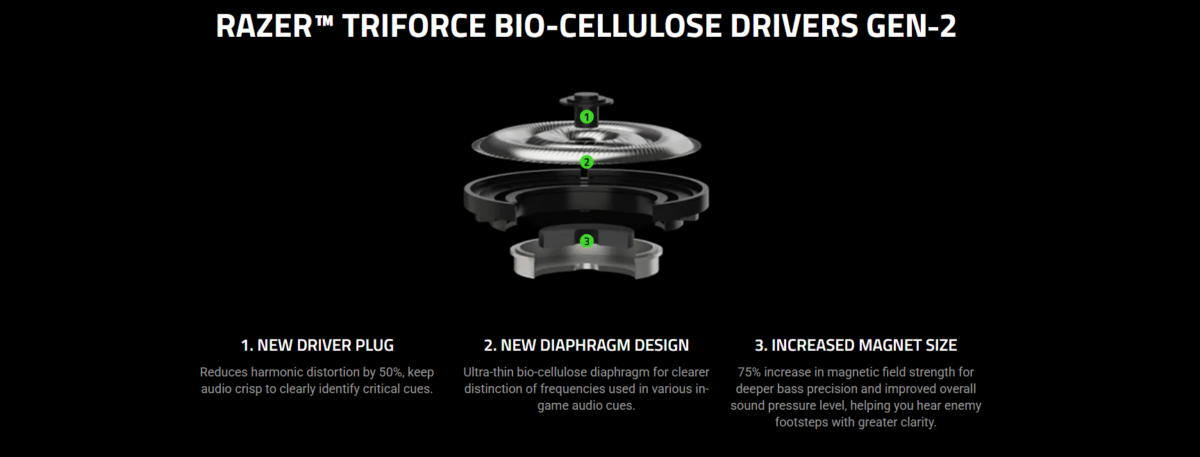
The number one task of a gaming headset is to transmit audio well, so Razer has also improved the drivers. The second-gen TriForce Bio-Cellulose Drivers aren’t just a mouthful, they also sport a new driver plug, a new diaphragm design, and an increased magnet size.
If that all sounds like mumbo-jumbo to you (we have an article on headphone drivers if you’re interested) then we’ll skip to the important part: the BlackShark V3 Pro sounds better than the V2 Pro. That was already an extremely capable gaming headset, but it lacked somewhat for content consumption. The new and improved drivers in the BlackShark V3 Pro make the headset sound cleaner and more defined when listening to music or watching a show.
Obviously, the fantastic gaming performances from the V2 Pro are also carried over. The wide soundstage helps with locating enemies, and positional accuracy is also very good. You also still get access to a whole bunch of EQ presets (or you can create your own) to match your game of choice. This way, you’ll always have optimized audio that helps you get an edge in-game, no matter what you’re playing.
Updated microphone explained
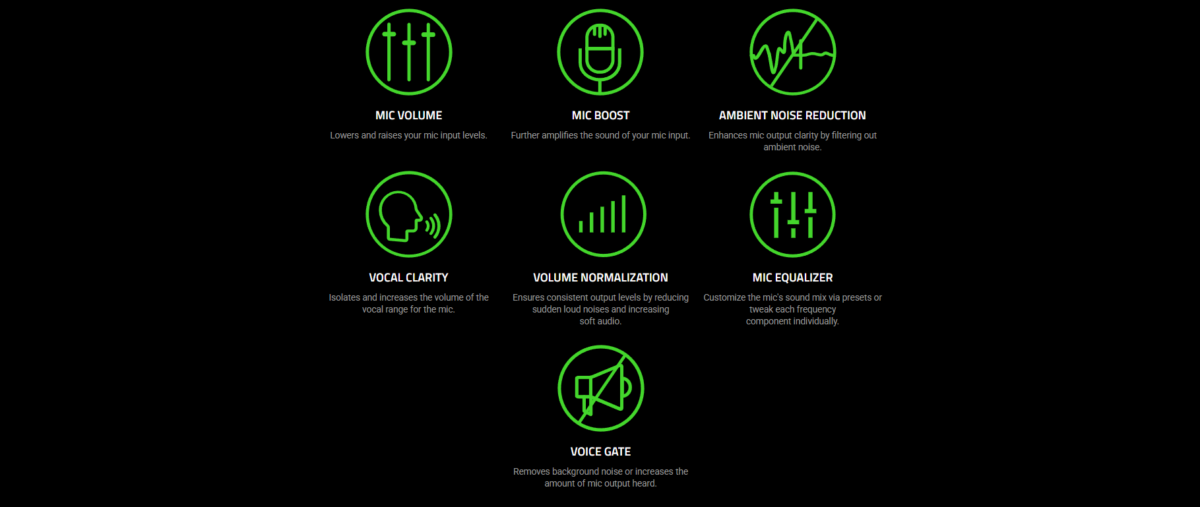
The V2 Pro’s mic was already extremely impressive, but Razer kicked it up a notch with the new HyperClear mic. This large-capsule microphone introduces a number of improvements over the old one, and it also allows users to tweak the mic sound to match their voice or circumstances.
The result is a mic that sounds more natural, clearer, and overall better than on the V2 Pro, with built-in noise reduction filters to help your call come through clearly, even when you’re playing in busy environments. Things like cars passing by or even people talking behind you will be filtered out so that your teammates can hear you more clearly, making for a more focused experience for everyone.
Wireless performance explained
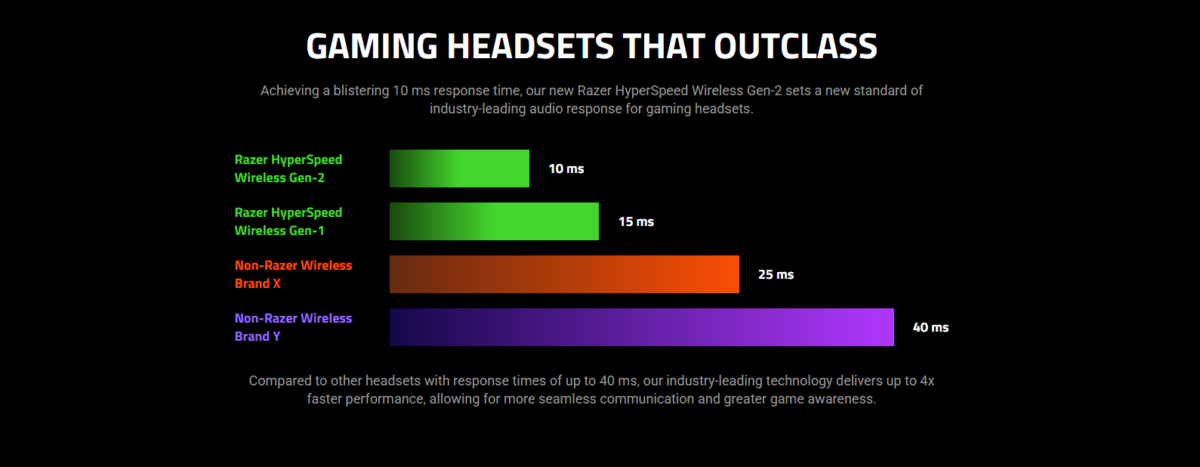
Finally, the last big upgrade (on paper) is the move to Razer’s HyperSpeed Wireless Gen-2. This reduces the already-impressive response time of 15ms to 10ms, which is up to 4 times faster than competing brands, according to Razer.
This sounds mightily impressive, and on a technical level it is, but audio latency on (quality) gaming headsets isn’t really a factor. We always applaud brands that push the boundaries and set new standards, so this is a cool improvement, but you probably shouldn’t expect to hear things faster than you would with your old Razer BlackShark V2 Pro.
This isn’t some groundbreaking new tech, but rather an upgrade on something that was already really good, which is good to see. Brands pushing their technology to the next level is always a net win if it doesn’t come with any compromises for the user.
Who should buy it
Consider the Razer BlackShark V3 Pro if you play competitive FPS and want close to the complete package: top-tier positional audio, a good mic, comfort for long sessions, and the bonus of ANC that few esports headsets offer. It’s also the obvious pick if you’re coming from an older or wired headset and want a modern wireless flagship without overthinking it.
If you already own a BlackShark V2 Pro and you’re happy with it, you should probably think on things a bit. The V3 Pro is a real step up, but an incremental one, and the V2 Pro is still a fantastic headset.
FAQ
What’s new on the BlackShark V3 Pro vs the V2 Pro? The major changes are Hybrid Active Noise Cancellation, a Full Band 12 mm HyperClear mic, second-gen TriForce Bio-Cellulose 50 mm drivers, faster HyperSpeed Wireless Gen-2 (down to roughly 10 ms), the ability to run wireless and Bluetooth at the same time, and swappable magnetic ear-cup covers.
Which games is the BlackShark V3 Pro best suited to? It’s built first and foremost for competitive shooters, and Razer worked with pros to tune its in-game EQ profiles for titles like Counter-Strike 2, VALORANT, Apex Legends, Call of Duty: Black Ops 6, and Halo Infinite. That’s where the wide soundstage and footstep clarity matter most, but the upgraded drivers also make it a capable all-rounder for single-player games, music, and shows.
How long does the battery last? You’re looking at around 70 hours of playtime per charge over USB-C, and a quick 15-minute top-up is enough for roughly six more hours of use.
Can it connect to two devices at the same time? Yes. It can run a 2.4 GHz wireless connection and Bluetooth simultaneously, so you can stay on a phone call while gaming on PC or console, with USB and 3.5 mm available as well. For the game audio itself, you should stick to the 2.4 GHz connection, as Bluetooth isn’t fast enough for that.
Can I adjust the noise cancellation? Yes. There are four ANC levels to choose from in Razer Synapse or the Razer Audio app, along with an ambient mode if you’d rather hear what’s around you.
Conclusion
It’s always difficult for brands to come out with a successor to a wildly popular product. Change too much, and loyal users might be turned off. Change too little, and people will complain that you’re resting on your laurels.
Looking at reviewers, user opinions, and pro scene data, we can quite confidently say that Razer nailed it, though. The BlackShark V3 Pro builds on what made the V2 Pro so beloved, and manages to add meaningful improvements without touching the DNA of its predecessor. The improved sound quality, addition of ANC, and the better-sounding mic are all meaningful, immediately noticeable upgrades. On top of that, you also get more ‘under the hood’ feature changes, like the improved wireless tech.
The BlackShark V2 Pro was a standard-defining product. The BlackShark V3 Pro raises those standards even further. It looks like it’s going to be a long time before we see another challenger for the ‘king of gaming headsets’ crown.


