Introduction
Dota 2 is one of the most complex games you can play. Its deep mechanics, enormous hero pool, and steep learning curve often scare away new players before they are willing to put more hours into the game. But if you stick with it and truly put effort into learning the game for what it is, you’ll come to discover one of the most rewarding competitive experiences out there. The amount of satisfaction you will get from winning adrenaline-pumped games is unmatched when compared to other games. This DOTA 2 beginner guide is written for newcomers and beginners who want to improve quickly, avoid common mistakes, and ultimately enjoy the game as it’s meant to be played.
Let’s break down everything you need to know into five practical sections.
Understanding the Basics
Before you can get good at Dota 2, you need to understand how the game actually works.
The basis of Dota 2 is a 5v5 battle between two teams; the Radiant and Dire. Each team’s goal is to destroy the enemy’s Ancient, located deep within each other’s base. It might sound simple, but getting there involves complex interactions, resource management, hidden mechanics, hyper-focus, and good coordination between teammates.
The map is divided into three lanes; top, middle and bottom. Between the lanes lies the jungle area where neutral creeps exist. Every 30 seconds, lane creeps will spawn and march down lanes. Similarly, neutral creeps respawn every minute if they are killed. Killing creeps offer gold and experience through a process known as ‘Farming’, and understanding when to farm jungle versus lane is crucial in determining game progression and pacing. In the lanes, there will also be towers, and destroying them gives access to deeper parts of the map — and eventually, the enemy base. Inside the bases, there will be buildings known as ‘barracks’, with each lane having the ‘melee barracks’ and ‘ranged barracks’. Destroying these buildings causes stronger lane creeps to spawn for that particular lane, and is a highly prioritized objective in the game. The Ancient can only be targeted once the towers protecting it has been destroyed.
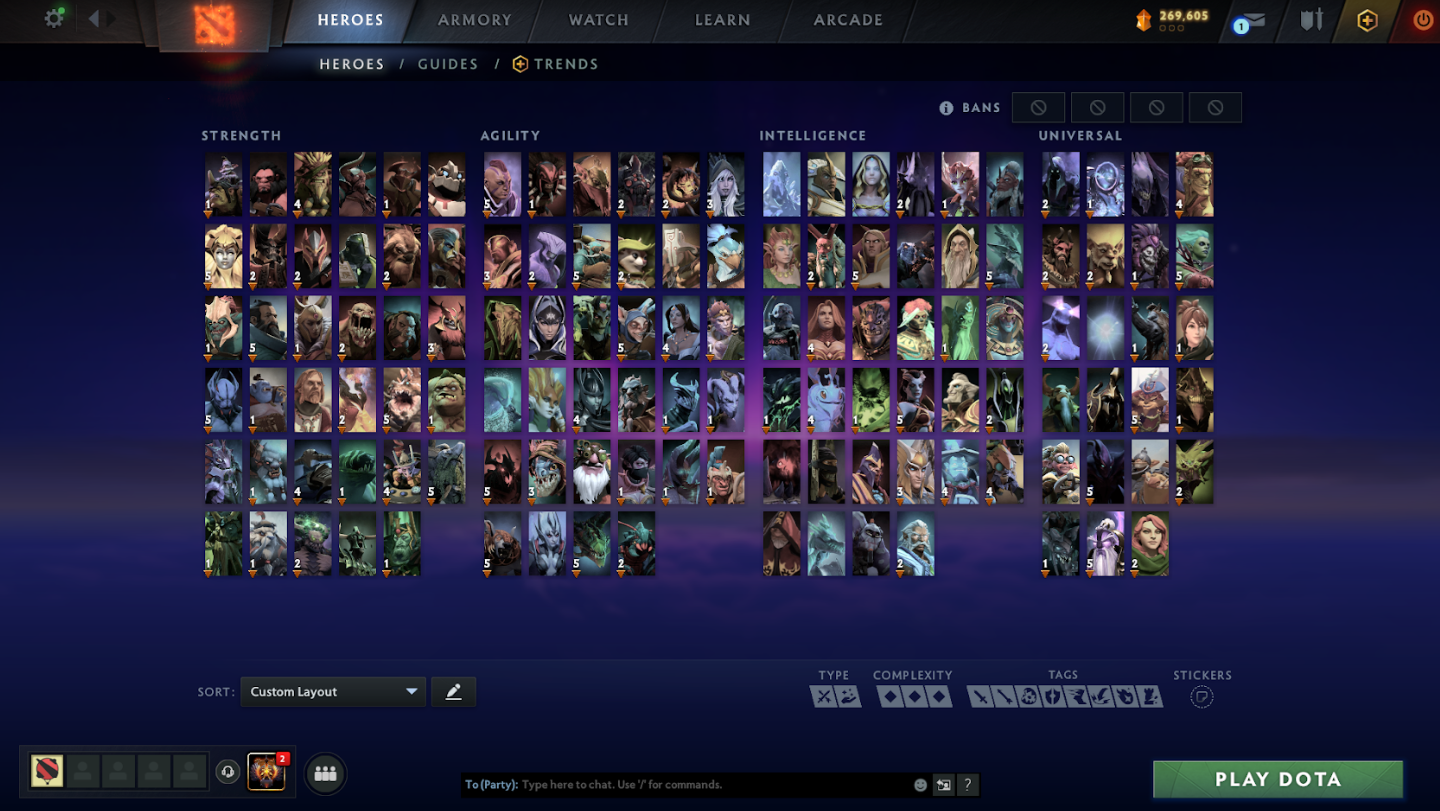
Moving on, heroes are the core of Dota 2. There are over 120 of them, with each having a unique set of abilities and a preferred role. There are 5 roles in total, and each role will be assigned to specific lanes in the game.
These roles are divided into:
| Role Name | Lane | Function |
|---|
| Carry (Position 1) | Safe Lane | Farm heavily, deal damage late game |
| Mid (Position 2) | Mid Lane | Gain levels/XP quickly, gank other lanes |
| Offlane (Position 3) | Offlane | Disrupt enemy carry, build tanky items |
| Soft Support (Pos 4) | Roam/Offlane | Provide utility, rotate between lanes |
| Hard Support (Pos 5) | Safe Lane Support | Ward, protect carry, buy utility items |
Once you are in a match, much of the gameplay revolves around creeps — pushing them out (killing the enemy’s creeps to apply map pressure) and providing map vision and information to your team. Each lane will be tasked with the same goals and objectives; to beat your opponents in the lane and break their towers with the help of creeps.
Choosing Your Roles & Heroes
When you are first starting out, choosing the right role and hero can make or break your experience. Not all heroes are beginner-friendly, and attempting to pick up complex and difficult heroes early on can lead to lots of frustration and difficulties adjusting to the game.
If you want to ease into the game, start by familiarizing yourself with what each hero does. In the ‘Heroes’ section, the game will show you the complexity level of each hero. Begin with those that are low complexity and easy to learn. You can also sort the heroes according to their roles and attributes.
Support
If you prefer to help your teammates and want to be involved in more map movements or rotations, start with the ‘Support’ role. The support role is the easiest role to pick up as they do not need to focus too much on gold or item progressions as much as the other core roles. Instead, they rely much more on map awareness, placing wards for vision, helping your teammates survive fights, and disabling their enemies. Heroes like Lion, Lich and Crystal Maiden are great picks for beginners. They offer crowd control spells, are long ranged, have easy-to-understand spells and provide big team impact.
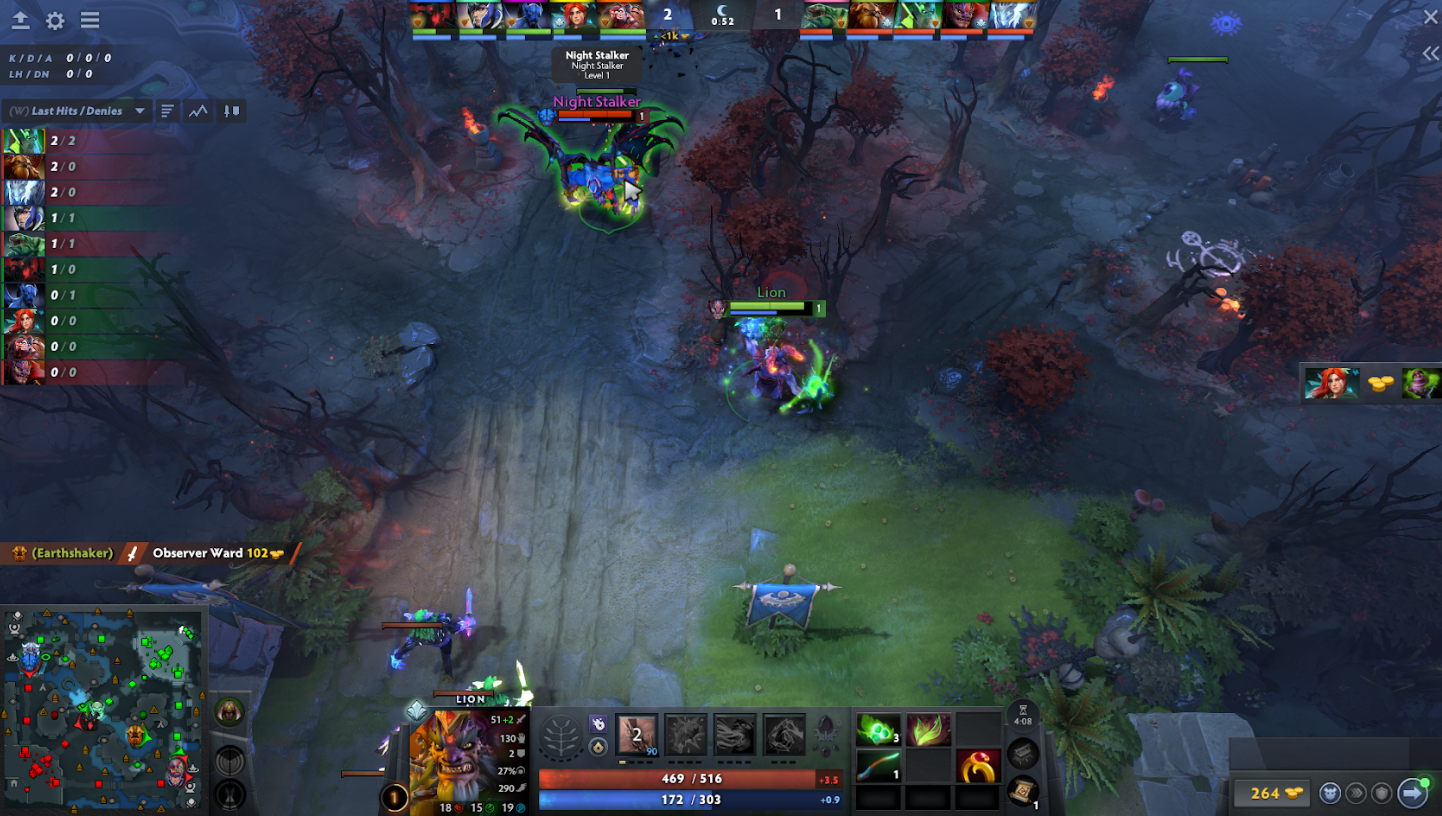
The support roles are categorized into ‘Hard Support’ which is position 5 and ‘Soft Support’ which is position 4. The positions simply refer to their ‘farm priority’, meaning their order of priority in killing creeps for gold as compared to their teammates. Position 5 supports will start the lane with their carry in safelane and typically do not require much items to come online but are more reliant on levels. On the other hand, position 4 supports will start the lane with their offlaner and usually require more farm to hit key items like Blink Daggers and other utility items to maximize their hero’s impact.
Offlane
For players looking for a more aggressive playstyle, the ‘Offlane’ role is a solid choice. It’s slightly more forgiving than mid or carry due to the heroes being more tanky and harder to kill, which gives you a little more room for error. Centaur and Tidehunter are good examples of offlane heroes for beginners to learn as they don’t require very high mechanical skills to use and have fairly simple skillsets.
Carry
Next, if you like the process of gradually becoming stronger through killing creeps and farming for gold, then the ‘Carry’ role will suit you best. Carries typically start the game relatively weak but scale into powerful late-game heroes capable of dishing out high damage in team fights and securing victory for their team. Playing carries requires more advanced knowledge such as efficient farming patterns, good last-hitting, avoiding unnecessary deaths and optimizing time. If you want to try carry, stick to simpler heroes like Sniper or Juggernaut, who don’t rely on complex combos or positioning.

Mid
If you enjoy playing 1 versus 1 matchups and do not want to rely on teammates in lanes, then the ‘Mid’ role will be your best pick. Mid laners are often the tempo-setters of the game, taking on high-impact heroes that can gank side lanes, win lanes with superior mechanical skills, control power runes and dictate the overall pace of the game. This role requires sharp mechanics, good game sense and the ability to make quick decisions under pressure. Therefore, if you want to pick the mid role as your main role, then you would need to be keen on studying up on various macroconcepts related to the role to fully enjoy it.
While it is generally suggested for heroes to follow their specific roles and lanes, this will not always be true. Dota 2 is a flexible game in the sense that any hero or role can perform the same functions as that of the other roles. For example, while supports would typically start the game with taking on supportive roles, this can gradually change as the game progresses into later parts where the supports can also transition into core roles to carry games themselves. That is what makes Dota 2 stand out in comparison to other MOBAs out there.
Similarly, the core roles of carry, mid and offlane can also build utility and support items if they deem it necessary based on how the game is progressing. There is no one size fits all in this game: anything and everything can work.
Core Gameplay Concepts
Dota 2 is not a game you can win by just clicking buttons or pressing your mouse clicks faster. You will need to develop some essential habits and skills if you want to get better. Here is a list of core gameplay concepts (known as macroconcepts) you need to master in order to become a good Dota 2 player.
1. Last-Hitting & Denying
Last-hitting refers to landing the final blow on enemy creeps to gain gold. While it sounds simple, consistently last-hitting in the laning phase requires good timing, focus, and an understanding of your hero’s attack animation. Missing last-hits means falling behind in gold and delaying your core items. Practicing this mechanic in bot matches or demo mode can greatly improve your early-game efficiency. Denying is also fairly important as it prevents your opponents from getting gold and reduces their XP gain from creeps. This can be done by delivering the last hit blow (see How To Last Hit in Dota 2) onto your own creeps. Note that your creeps can be denied once they drop below 50%, but you will need to get the last hit deny to prevent your opponents from getting the gold and reducing their XP gain.
2. Warding
Warding is crucial for vision and map control. Wards are invisible, meaning they require ‘Invisibility Detection’ to be seen in order to be dewarded. Wards are divided into two types, namely Observer Wards and Sentry Wards. Observer Wards are necessary to provide sight of enemy movements, rune spawns, and objectives, while Sentry Wards are used to detect invisible targets or deward enemy vision. Even if you’re not a support player, understanding warding spots and contributing to vision can drastically impact your team’s ability to make calculated decisions, execute plays and avoid ganks.
3. Farming Patterns & Efficiency
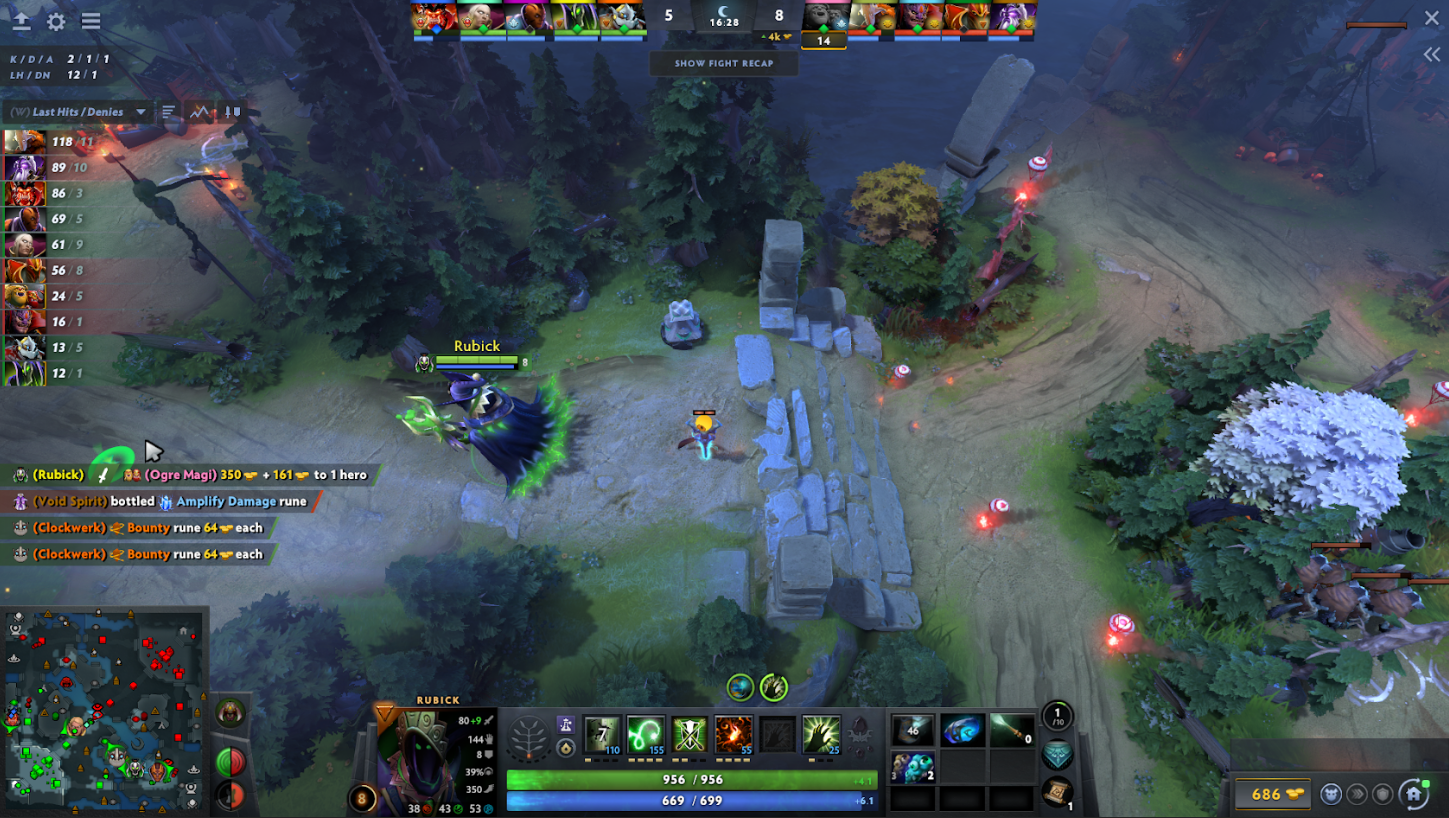
Farming efficiently is more than just killing creeps — it’s about knowing where to farm, when to rotate, and how to do it safely while avoiding being caught by your opponents. Good farming patterns include understanding the most optimal farming area on the map, maximizing jungle camps and lane waves simultaneously, reading game timer to predict wave position and jungle stacks, and contributing to your teammates at the same time without AFK farming. Following optimal farming routes while minimizing downtime ensures you hit your item timings without falling behind or dying unnecessarily.
4. Map awareness
Map awareness means constantly reading the minimap and keeping track of what’s happening all around. Regularly look at the minimap to spot missing heroes, incoming ganks, or opportunities to rotate and help teammates. It is not enough to just glance at the minimap, you also need to click on the specific locations on the minimap to fully understand what information is being presented in the moment. Strong map awareness helps you avoid dangerous areas, make smarter movements and capitalize on the enemy’s mistakes.
5. Itemization & Guides
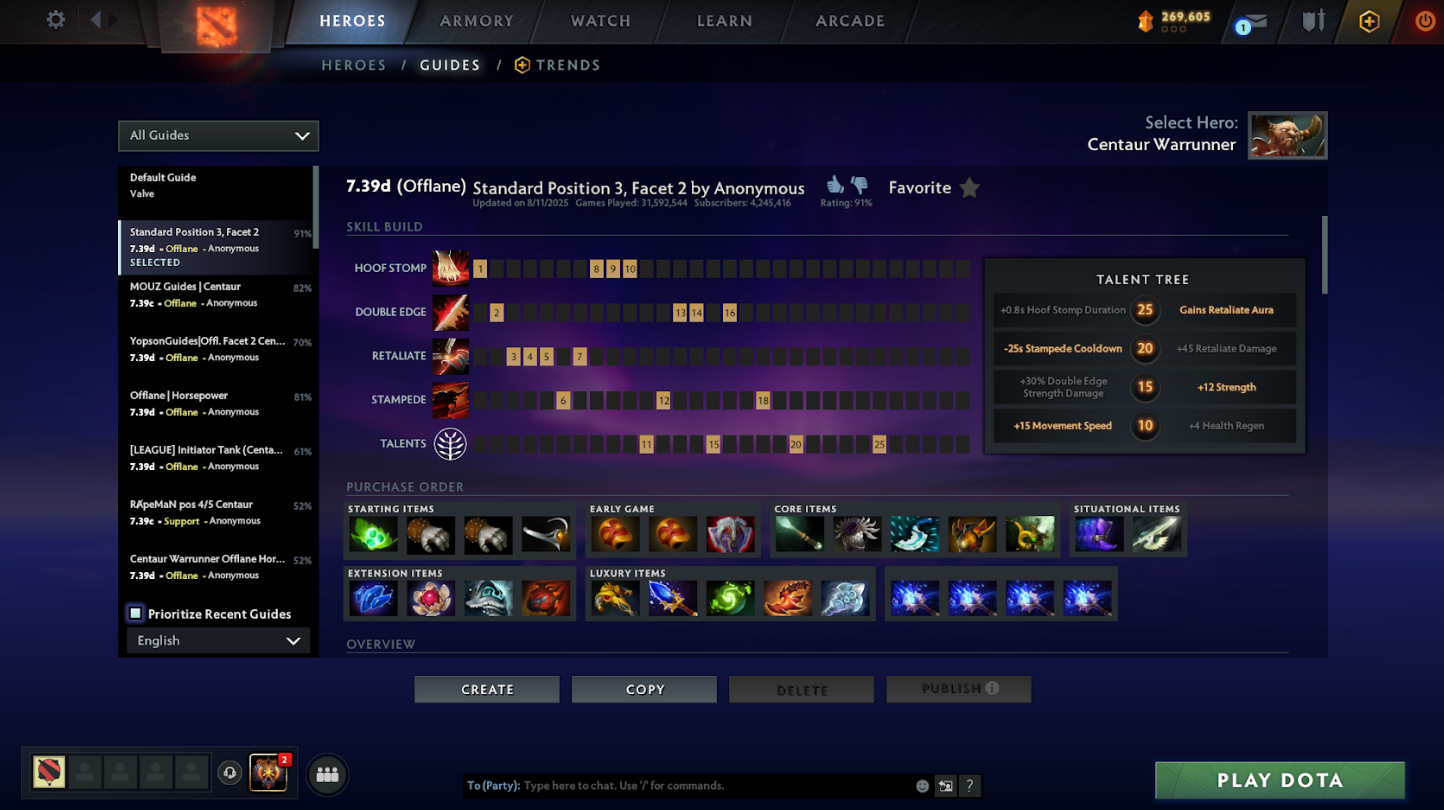
When you are new to the game, one of the best ways to learn heroes’ itemization and their abilities is through Dota 2’s hero guides. Simply pick any of the top-rated guides for your preferred hero of choice, and slowly familiarize yourself with the idea of the items and what they do for your hero. Use these frequently until you build confidence to experiment with different items and skillbuild sequences. Ultimately, itemization isn’t just about following a standard build — it’s about adapting your items to the game you’re in.
6. Action Priorities
The most difficult part about learning Dota 2 is the topic of ‘decision-making’. Decision-making requires understanding action priorities, meaning the ability to reason and justify situations based on the information presented, and taking the necessary actions in turn. Being able to make sense of what your hero should be doing at any given point in time — pushing, farming, ganking, defending, or teamfighting will put you miles ahead of majority of Dota 2 players.
Final Thoughts: Your Path to Becoming a Better Player
There’s no avoiding the fact that Dota 2 is a notoriously difficult game to pick up. But it is also deeply rewarding. No one starts out perfect, and even pro players learn something new every day. Getting good at Dota 2 takes time. As I always tell my students, there is no shortcut or secret trick to mastering the game. It’s a long path of repeated trial and error processes: understanding the basics, picking the right heroes, avoiding common mistakes and committing to steady improvement is the key to self-progression.
The journey from beginner to skilled player is filled with willingness to accept losses, making mistakes, learning from small victories, and consistently building up good habits from the ground up. Treat every game as a lesson, and focus more on the improvement process rather than looking at the wins or losses. If you want personal guidance to learn Dota 2 at a much faster and efficient pace, feel free to reach out to me through my website or Discord server. Good luck, and welcome to Dota 2.

