Introduction
Blacklyte is a brand that’s best known for its gaming chairs (you see them pop up in huge tournaments all the time) but they’ve also got two sit-stand desks in their lineup in the form of the Atlas and the Atlas Lite. We’ve already taken an in-depth look at the Lite version in our full review, but in this article we’ll focus on the differences between both versions to help you choose your next desk. Obviously, we’ll also dive into what makes these desks worth considering as well.
Let’s get into it.
A Shared Foundation
Before we get into what separates these two desks, it’s worth discussing what they have in common.
It’s good to know that, whichever desk you go for, you’re getting an electric, dual-motor sit-stand desk with programmable memory presets, anti-collision detection, and a max load of around 120kg. You can throw a couple of monitors, a desktop PC, and all the peripherals and desk gadgets you can think of on the desk, and it will still function smoothly and reliably.
For both desks, you can also get first-party Blacklyte accessories. Right now, there are monitor arms available (both single-monitor as well as dual-monitor versions) but more stuff is coming in the future.
So fundamentally speaking, you’re getting a top-performing adjustable desk, no matter which option you go for. Knowing that you won’t have to fear that you’re compromising on the stability or reliability of your desk is great for peace of mind, so let’s get into the differences.
The Atlas Lite: Understated, but Refined
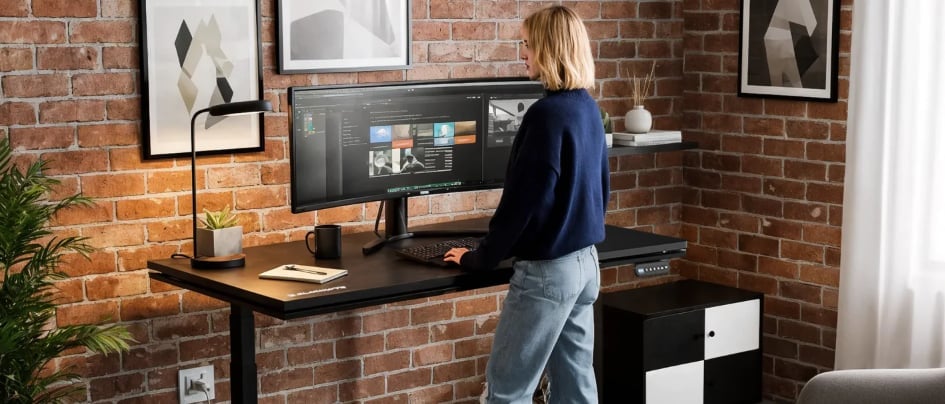
The Atlas Lite is the more understated option of the two. It skips the flashier gaming features and aesthetics in favor of a sleek, minimalist look that fits into pretty much any room. The Natural Oak finish in particular looks like a high-end desk you’d see in an office space rather than in a gaming den, though it should be noted that it’s an oak look, and not real oak.
Speaking of finishes: the Atlas Lite comes in three finishes, namely Moonstone White, Obsidian Black, and the aforementioned Natural Oak. What’s also nice is that it is available in three widths: 140, 160, and 180cm. All have a depth of 80cm, which we think is a nice touch, as smaller desks meant solely for office usage typically don’t have enough depth to fit a PC, large mousepad, and the likes. With the Atlas Lite, you can get a more compact desk without sacrificing any depth.

The height range runs from roughly 70 to 115 centimeters, which covers the vast majority of users comfortably.
One detail we really appreciate is the cutout along the back edge for routing cables, which lets you push the desk flush against a wall without trapping all your wires behind it. Paired with the cable tray underneath, it’s one of the better cable management setups in this price range, and that’s an area a lot of competing desks skimp on. The cable management features also come with the desk and aren’t optional (paid) extras, which is nice.
If you want a reliable sit-stand desk that does its job without any overly gamery bells and whistles, this is the one. It’s the pick for people who want the ergonomic benefits and a clean look without spending four figures. Even though the ‘Lite’ in the name might make you think it’s a desk with lots of budget components, it really isn’t. It’s a well-made, reliable sit-stand desk.
The Atlas: Going All Out
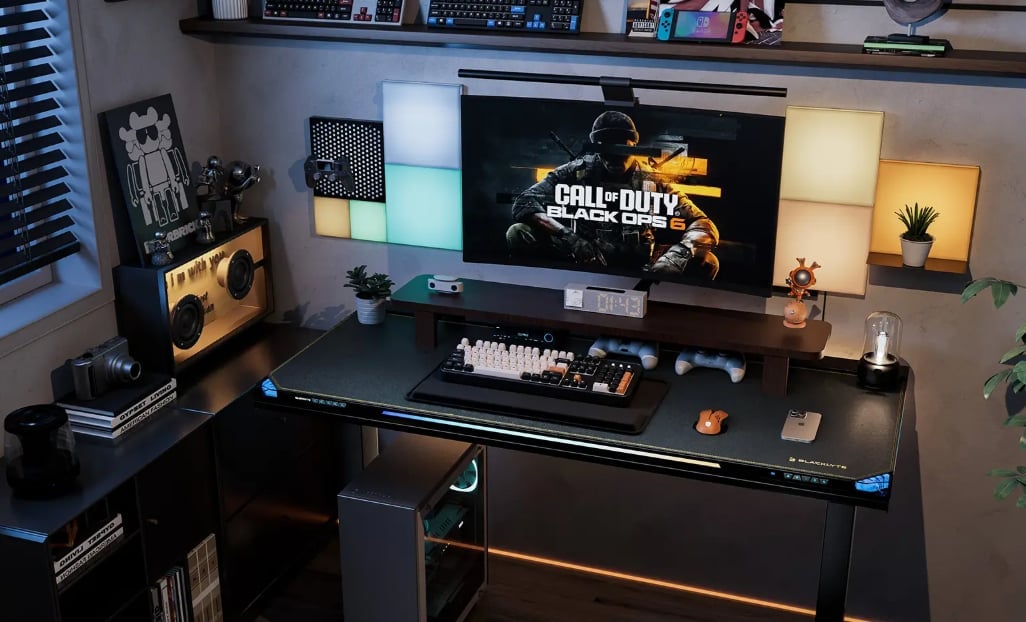
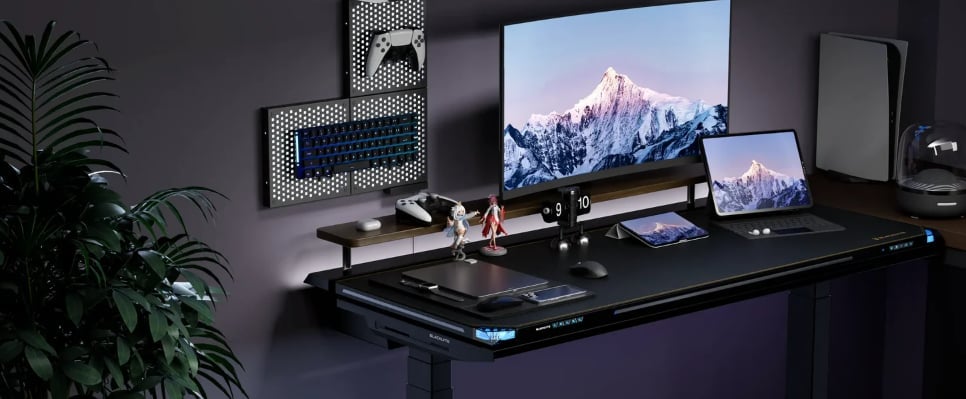
The regular Atlas is where Blacklyte goes all out. There are LED strips along the front edge and the sides, plus two corner lights, which immediately gives the Atlas a much more eye-catching look. Through Blacklyte’s software, the lighting can sync with your games, your screen colors, and even your audio, sometimes with the help of AI. With this, you can make your desk seamlessly fit into your workflow or game of choice.
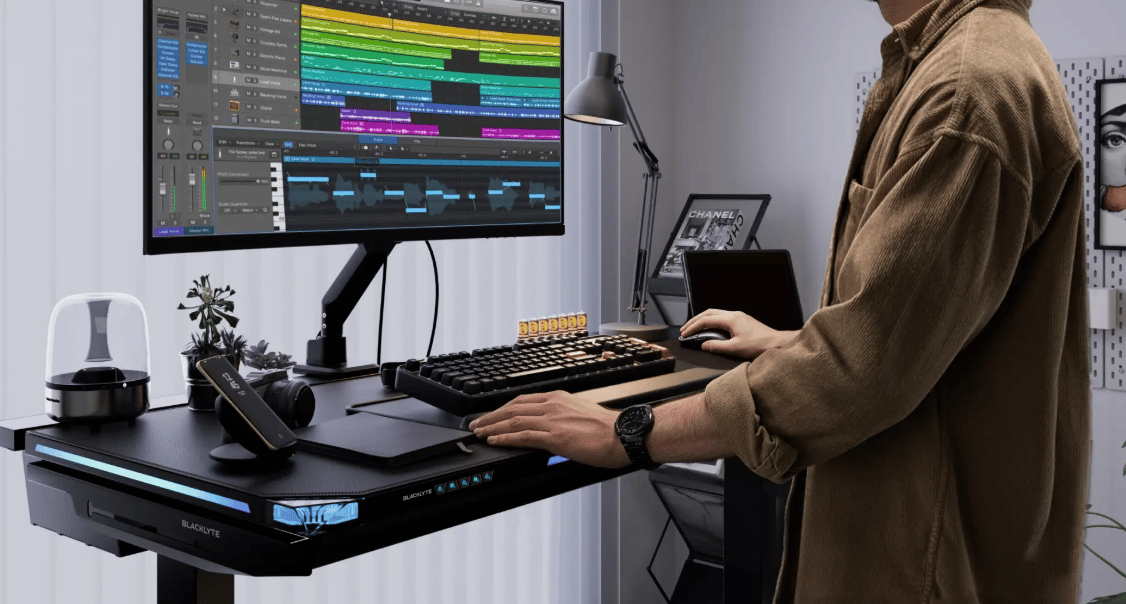
Beyond the lights, the Atlas is a more premium product in terms of the overall execution. The height range goes a bit higher than the Lite, for example, up to around 137 centimeters. The power supply is also hidden within the desk leg, giving the regular version a much cleaner aesthetic. It also has a magnetized leatherette desktop cover to further emphasize the premium look. And the cable management tray spans the entire width of the desk, which means you’ll have an easier time creating a streamlined, cable-managed setup.
All in all, the regular Atlas is meant to be more of a ‘centerpiece’ with some more premium features rather than just a desk. If that’s what you’re into, it can be a great option. Do note that it’s only available in one size, however, and that’s 150 x 70cm.
Which One Should You Get?
Because both desks share the same core, this decision is simpler than it might initially appear. The motors, the stability, the load capacity, the warranty, and the sit-stand experience are all basically the same. As such, the question really comes down to two things. Do you want the more premium experience, complete with bells and whistles such as an integrated RGB system, or are you looking for a more basic, subdued desk?
Get the Atlas Lite if you want a clean, capable sit-stand desk that looks at home anywhere. Get the standard Atlas if the interactive lighting and the full battlestation look are exactly what you’re after, and you want your desk to be a statement piece.
Ultimately, the decision thus comes down to your preferences and personal taste.
Conclusion
The Atlas and the Atlas Lite are two takes on the same foundation. One leans into the gamer archetype with interactive lighting and an eye-catching presence, and the other focuses on a clean, more down-to-earth experience that fits just about anywhere. Both are well-built, so it’s a matter of deciding what features and aesthetics you are after.
If you want a quick and snappy summary: the standard Atlas is for people who want their desk to be the showpiece of the room and want a lot of customization options, while the Atlas Lite is the value-first offering of the two, giving you a great sit-stand experience for less money than much of the competition. You can’t go wrong with either, but hopefully you now know a bit more to support your decision.


